Unwrapping Sustainability: How Shrink Wrap is Leading the Circular Economy Revolution
Unwrapping Sustainability: How Shrink Wrap is Leading the Circular Economy Revolution
In today’s industrial landscape, sustainability is more than a trend—it’s a necessity. Shrink wrap, long celebrated for its efficiency and protective capabilities, is now taking center stage in the circular economy. Companies like Innovative WrapTech Pvt. Ltd. are pioneering solutions that combine high-performance packaging with environmental responsibility.
This guide explains how shrink wrap contributes to sustainability, how it works, and how businesses can leverage it to reduce waste, optimize operations, and stay competitive.
In today’s industrial landscape, sustainability is more than a trend—it’s a necessity. Shrink wrap, long celebrated for its efficiency and protective capabilities, is now taking center stage in the circular economy. Companies like Innovative WrapTech Pvt. Ltd. are pioneering solutions that combine high-performance packaging with environmental responsibility.
This guide explains how shrink wrap contributes to sustainability, how it works, and how businesses can leverage it to reduce waste, optimize operations, and stay competitive.
Why Shrink Wrap is Critical in Modern Operations
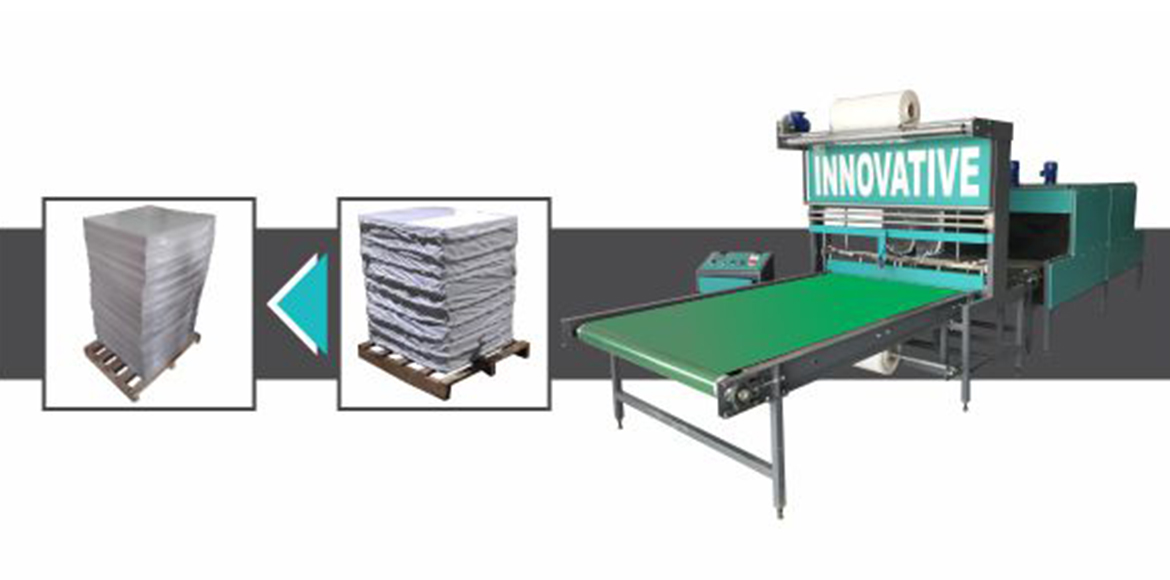
Shrink wrap supports both operational efficiency and sustainability goals:
Protects products during transport and storage
Minimizes film usage through pre-stretch systems
Reduces labor dependency
Enhances shelf appeal with clean, professional packaging
Supports circular economy goals through recyclable films
By implementing sustainable shrink wrap, businesses cut costs and carbon footprint simultaneously.
Types of Shrink Wrap Machines
1. Manual Shrink Wrap Machines
Small-scale operations
Low throughput
Best for seasonal or trial packaging
2. Semi-Automatic Shrink Wrap Machines
Medium production volumes
Balances efficiency and investment
Common in small to mid-sized businesses
3. Fully Automatic Shrink Wrap Machines
Conveyor integration
Minimal operator intervention
4. L-Sealers & Chamber Shrink Machines
Ideal for retail-ready packaging
Consistent shrink quality with recyclable films
Key Technical Features and Sustainability Benefits
| Feature | Benefit |
|---|---|
| Pre-stretch system | Reduces film usage by up to 40% |
| Adjustable temperature | Prevents over-shrink, reducing scrap |
| Automated conveyors | Lower energy consumption per unit |
| Recyclable film support | Aligns with circular economy initiatives |
| Digital controls | Precise settings for uniform shrink |
Standard Industry Specifications
Sealing temperature: 150–200°C
Tunnel temperature: 160–220°C
Conveyor speed: Adjustable 6–15 m/min
Power supply: 380–415V, 3 Phase
Film types: PCR, PE, POF, recyclable PVC
Output capacity: 6–60 packs/min depending on machine
Industries Leading Sustainability with Shrink Wrap
Food and FMCG – Protects perishables, reduces waste
Pharmaceuticals – Hygienic and recyclable packaging
Cosmetics & Personal Care – Premium presentation with eco-friendly films
Electronics & Hardware – Damage reduction with recyclable wrap
Logistics & E-commerce – Secure, sustainable pallet wrapping
How to Choose the Right Shrink Wrap Machine
Production Volume – Match machine speed with daily output needs
Film Type – Ensure compatibility with recyclable or PCR films
Automation Level – Semi-automatic for moderate volumes, fully automatic for high throughput
Budget & ROI – Factor in long-term material savings and labor reduction
Space Requirements – Consider tunnel and conveyor dimensions
Common Operational Problems Solved by Shrink Wrap Machines
Film waste from manual wrapping → solved by pre-stretch systems
Inconsistent sealing → automated heat and sealing control
Product damage during transport → tight, uniform wrap
High labor costs → conveyor and semi/full automation
Sustainability targets → recyclable and reusable films
Safety Standards and Operator Protection
Shrink wrap machines comply with:
CE safety standards
Emergency stop systems
Heat insulation and guards
Electrical overload protection
Proper ventilation for heat tunnels
These safeguards protect operators while maintaining productivity.
Future Trends: Automation + Circular Economy
IoT-enabled shrink wrap machines monitor film usage, energy consumption, and maintenance needs.
Smart factories integrate shrink wrap systems into overall packaging line analytics.
Sustainable films continue to improve in strength and recyclability.
Companies that adopt automated, sustainable shrink wrap are positioned for both operational efficiency and environmental leadership.
FAQs
Q1. How does shrink wrap support the circular economy?
Sustainable shrink wrap uses recyclable or reusable films, reducing plastic waste and enabling materials to be reintegrated into new packaging.
Q2. Can all shrink wrap machines use recyclable films?
Most modern semi-automatic and fully automatic machines support PCR and PE films, but always confirm compatibility with your supplier.
Q3. How does shrink wrap reduce operational costs?
Pre-stretch systems reduce film usage, automation lowers labor dependency, and fewer product damages cut material loss.
Q4. What industries benefit most from sustainable shrink wrap?
Food & FMCG, pharmaceuticals, cosmetics, electronics, and logistics benefit from protective, recyclable, and professional packaging.
Q5. Is shrink wrapping safe for operators?
Yes, machines follow CE standards with heat guards, emergency stops, overload protection, and proper ventilation to ensure operator safety.