
Engineered for Endurance: The Intricate Process of Building Reliable Pallet Wrapping Machines
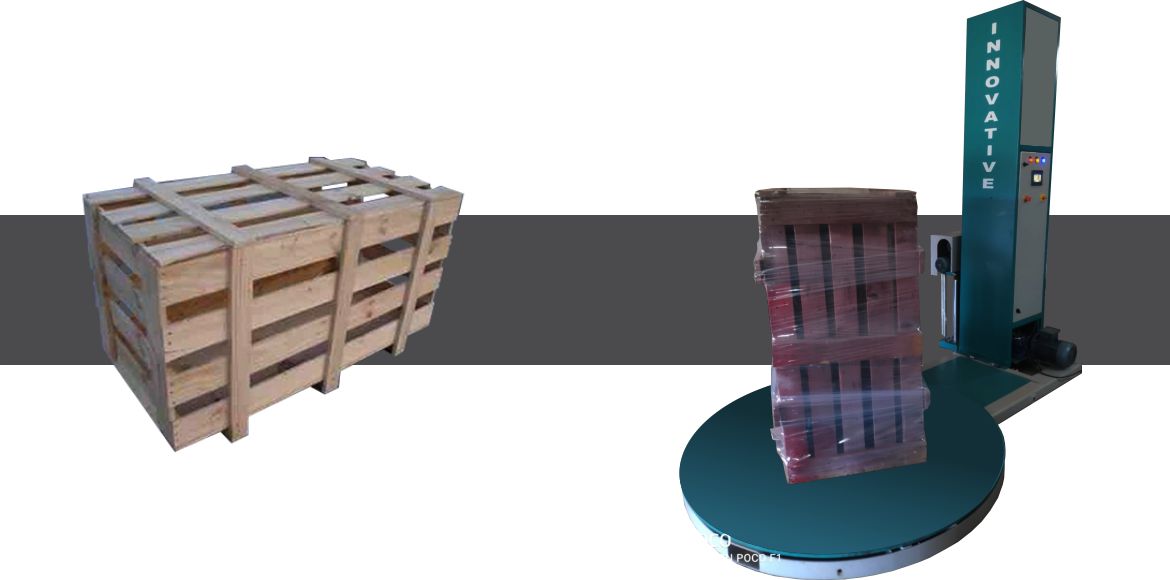
Engineered for Endurance: The Intricate Process of Building Reliable Pallet Wrapping Machines
Reliability in pallet wrapping does not happen by chance. It results from engineering discipline, field experience, material science, and relentless testing. At Innovative WrapTech Pvt. Ltd., we build pallet wrapping machines to survive continuous industrial use, harsh environments, and unpredictable load conditions—without compromising performance or safety.
What Is a Pallet Wrapping Machine?
A Pallet Wrapping Machine Manufacturing secures palletized goods using stretch film to stabilize loads for storage and transportation. The machine applies controlled film tension and precise overlap to protect products from shifting, crushing, moisture, and transit damage.
Unlike manual wrapping, a pallet wrapping machine delivers repeatable containment force, consistent coverage, and measurable performance, pallet after pallet.
How a Pallet Wrapping Machine Works
Pallet Placement
Operators or conveyors place the pallet in the wrapping zone.Load Detection
Sensors detect pallet height, weight, and profile.Film Carriage Engagement
The film carriage stretches the film using mechanical or powered pre-stretch rollers.Base Wrapping
The machine applies tight wraps at the pallet base to anchor the load.Vertical Wrapping Cycle
The turntable rotates or the arm revolves while the carriage moves vertically.Top Reinforcement
Additional wraps secure the upper layers of the load.Film Cut & Secure
Automatic systems cut and clamp the film to finish the cycle.Pallet Exit
The wrapped pallet exits the machine ready for transport.
This controlled process ensures load stability, reduced material waste, and repeatable packaging quality.
Why Pallet Wrapping Machine Manufacturing Matter in Modern Industrial Operations
Industrial operations face increasing pressure to move goods faster, safer, and cheaper. Pallet wrapping machines deliver:
Consistent load containment
Lower stretch film consumption
Improved worker safety
Faster throughput
Predictable packaging costs
Manual wrapping cannot match the precision, endurance, or scalability of engineered pallet wrapping systems.
Types of Pallet Wrapping Machines and When to Use Them
1. Semi-Automatic Pallet Wrappers
Use when: Low to medium throughput
Why: Cost-effective and easy to operate
2. Automatic Pallet Wrappers
Use when: High-volume operations
Why: Eliminates manual handling
3. Rotary Arm Wrappers
Use when: Unstable or lightweight loads
Why: Keeps pallet stationary
4. Ring-Type Wrappers
Use when: Maximum speed is required
Why: High throughput with compact footprint
5. Mobile Pallet Wrappers
Use when: Wrapping at multiple locations
Why: Flexibility without fixed installation
Endurance defines industrial packaging. A pallet wrapping machine must perform day after day, shift after shift, without failure. That endurance comes from thoughtful engineering, proven components, and real-world testing.
At Innovative WrapTech Pvt. Ltd., we do not just build machines—we engineer reliability into every rotation, wrap, and seal.
Frequently Asked Questions (FAQs)
Q1. What is a pallet wrapping machine and why is it used?
A pallet wrapping machine secures palletized loads with stretch film to improve load stability, reduce product damage during transport, and ensure consistent, repeatable packaging compared to manual wrapping.
Q2. How does a pallet wrapping machine reduce stretch film consumption?
The machine uses controlled tension and powered pre-stretch systems to stretch the film before application, which reduces film usage by up to 40–60% while maintaining strong load containment.
Q3. Which type of pallet wrapping machine should I choose for my operation?
You should select a semi-automatic machine for low to medium volumes, a fully automatic or rotary arm machine for high-volume or unstable loads, and a ring-type system for maximum throughput.
Q4. What industries commonly use pallet wrapping machines?
Industries such as FMCG, food and beverage, pharmaceuticals, logistics, cold chain, automotive, paper, and export packaging widely use pallet wrapping machines.
Q5. What safety features protect operators during pallet wrapping?
Pallet wrapping machines include emergency stop buttons, safety interlocks, overload protection, guarded moving parts, and fault alarms to ensure safe operation.