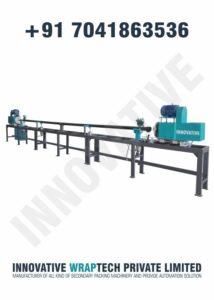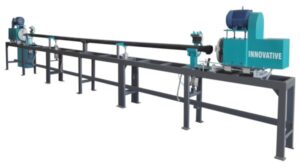
HDPE Pipe Friction Welding Machine – Efficient Industrial Pipe Joining
The HDPE Pipe Friction Welding Machine provides a reliable and efficient solution for joining high-density polyethylene (HDPE) pipes. Industries widely use it in water supply, irrigation, gas pipelines, and industrial applications because it ensures strong, leak-proof connections while saving time and reducing labor costs.
Our machines offer precise control over welding parameters, including rotation speed, friction time, and pressure, ensuring uniform and consistent welds. Operators can easily set the required parameters based on pipe diameter and wall thickness, allowing for flexible operation across a range of pipe sizes.
Benefits of HDPE Pipe Friction Welding Machine
Strong and Leak-Proof Joints: Produces durable, high-quality welds that prevent leaks.
High Efficiency: Reduces welding time compared to manual methods.
Cost-Effective: Saves labor, energy, and material costs.
Consistent Quality: Ensures uniform welds across different pipe sizes and diameters.
Versatile Application: Suitable for water pipelines, gas distribution, irrigation, and industrial projects.
Safe Operation: Equipped with safety mechanisms to protect operators.
Reduced Downtime: Minimal maintenance required for long-term operation.
Eco-Friendly: Reduces material waste during welding.
Features:
Automatic & Semi-Automatic Operation: Easy-to-use interface for precise control.
Adjustable Welding Parameters: Control over friction speed, pressure, and welding time.
Digital Display & Controls: Monitor welding cycles and parameters for accuracy.
Strong Clamping System: Secures pipes firmly during welding.
Emergency Stop & Safety Systems: Protects operators and prevents damage.
Compatibility with Various Pipe Sizes: Works with small to large-diameter HDPE pipes.
Durable Construction: Long-lasting machine body and components for industrial use.
Customizable Options: Tailored designs available based on specific project requirements.