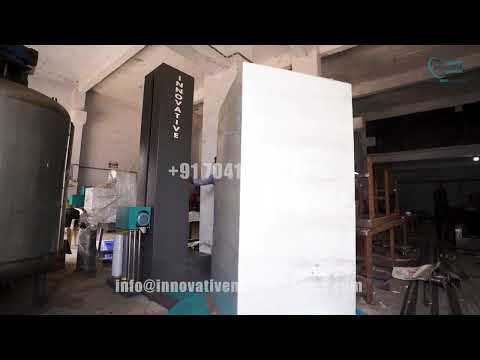
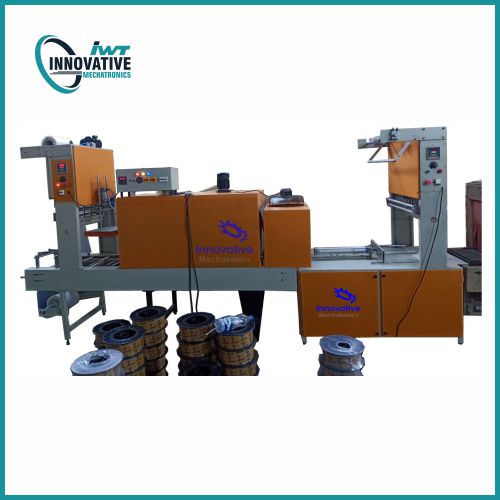
We are presenting fine quality Water Bottle Shrink Wrapping Machines with Manual Collation and with partial ‘U’ sealer. These products are developed from the best available technology.
The fully automatic shrink-wrap machine is such a machine using such a shrink-wrapping machine the products can be collected and can make a proper matrix for the products manufactured in Pharma, non-pharma such as food and FMCG companies.
The Fully automatic shrink wrapping machines are more applicable and are suitable for the high-speed production filling and packing lines to complete the packing activities in a short period.
The high-speed filling and packing production lines can be seen in the following companies and product lines:
Fully automatic Shrink wrapping machine for pharma companies product line
fully automatic Shrink wrap machine for syrup filling and packing lines
fully automatic Shrink wrap machine for tablet blisters packing line
Fully Automatic Shrink Wrapping Machine for FMCG and Food manufacturing companies
fully automatic Shrink Wrap machine for food packing lines line juice, souse, soup, etc
fully automatic Shrink wrap machine is more useful for cold drinks, cola and mineral water packing lines and is more cost-effective advantageous over shipper carton packing and also advantageous over packing timing
Range:
Products such as bottles, tins, cans, boxes, containers, which are available in numerous configurations of 6, 12, 18 or 24 with/without a base tray or with the help of FLAT SHEET at the bottom, could be shrunk wrapped at various speeds of 3-6 packs per minute
High-Speed Shrink Wrapping Machine – Innovative WrapTech Pvt. Ltd.
Buy high-speed shrink wrapping machines from Innovative WrapTech Pvt. Ltd. for efficient, precise, and safe packaging. Explore types, features, ROI benefits, and smart factory integration.
A high-speed shrink wrapping machine is an industrial packaging solution designed to wrap products quickly and securely using shrink films. These machines use heat to conform the film tightly around individual or grouped products, providing protection, tamper evidence, and a professional retail-ready finish.
High-speed variants excel in high-volume production environments where efficiency and consistency are critical. They are widely used in food and beverage, pharmaceuticals, cosmetics, electronics, and FMCG industries.
How the Machine Works – Step-by-Step
High-speed shrink wrapping machines operate in a systematic process:
Product Feeding:
Operators or automated conveyors feed products into the wrapping section.Film Feeding:
The machine automatically pulls shrink film from the roll and positions it around the product.Sealing:
A heat-sealing mechanism creates a tight seam, securing the film around the product.Shrink Tunnel Passage:
The sealed product passes through a heated shrink tunnel, where controlled heat shrinks the film uniformly.Cooling & Discharge:
Products exit the tunnel cooled and perfectly wrapped, ready for packing or shipment.
Operational Advantages:
Speeds up production while maintaining uniform packaging.
Reduces material waste due to precise film cutting and sealing.
Minimizes manual handling, lowering labor costs and errors.
Types and Variants
| Type | Use Case | Advantages |
|---|---|---|
| Automatic High-Speed Shrink Wrapper | Large-scale production with continuous feed | Maximum efficiency, minimal labor, integrates with conveyors |
| Semi-Automatic Shrink Wrapper | Medium-volume lines | Flexibility, lower upfront cost, easier maintenance |
| Inline Shrink Wrapper | Products already on conveyor | Smooth integration, high output, consistent speed |
| L-Bar Shrink Wrapper | Multi-product trays or bundles | Precise sealing, compact footprint, ideal for irregular shapes |
Safety Standards & Compliance
Complies with CE, ISO 12100, and industrial safety regulations.
Equipped with emergency stop buttons, thermal cutoffs, and interlock systems.
Operators must wear heat-resistant gloves, safety glasses, and protective clothing.
Proper training reduces accidents and ensures consistent output quality.
Buying Considerations
When selecting a high-speed shrink wrapping machine, consider:
Production Volume: Machines must match your peak output.
Product Types & Sizes: Choose flexible sealing mechanisms for varied products.
Power & Energy Requirements: High-speed machines consume more energy; evaluate efficiency.
Material Compatibility: Ensure the machine handles your preferred shrink film type.
ROI Factors: Labor savings, reduced material waste, and faster throughput justify investment.
Automation Potential: Machines with smart factory compatibility improve long-term scalability.
Cost Logic:
Professional-grade machines cost more upfront but offer durability, reduced downtime, and lower long-term operational costs compared to low-cost alternatives.
Future Trends
Automation & IoT Integration: Real-time monitoring, predictive maintenance, and smart production lines.
Energy-Efficient Heat Tunnels: Reduces energy costs while maintaining shrink quality.
AI & Vision Systems: Automated quality control and defect detection.
Sustainable Materials Handling: Supports eco-friendly shrink films with optimized heat settings.
Frequently Asked Questions (FAQs)
1. What products can a high-speed shrink wrapping machine handle?
It can handle bottles, cans, cartons, boxes, multipacks, electronics, and irregular-shaped products while maintaining consistent quality at high production speeds.
2. How fast can a high-speed shrink wrapping machine operate?
Depending on the model, production capacity ranges from 1,000 to 5,000 units per hour, making it ideal for large-scale industrial packaging.
3. Which shrink films are compatible?
These machines typically support POF (Polyolefin), LDPE (Low-Density Polyethylene), and PVC films, chosen according to product type and shrink requirements.
4. Is it safe for operators?
Yes. High-speed machines come with enclosed heat zones, emergency stops, and protective barriers to ensure operator safety during operation.
5. How does high-speed shrink wrapping reduce operational costs?
Automation reduces labor, prevents product damage, minimizes film wastage, increases throughput, and lowers rejects, providing a high ROI for manufacturers.