Products

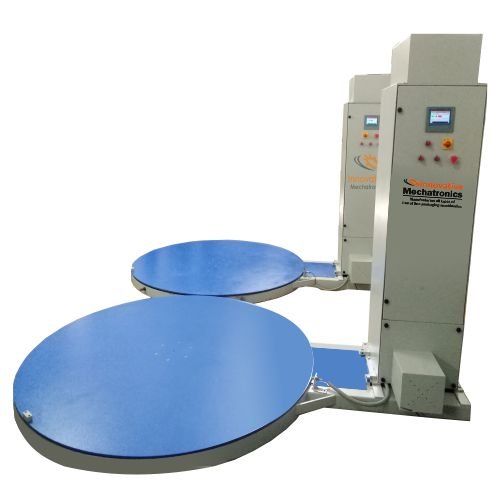
Top Pressure Pallet Wrapper

Top pressure pallet wrapper machine securing unstable pallet loads during stretch wrapping

Top Pressure Pallet Wrapper

What Is a Top Pressure Pallet Wrapper and How Does It Work?

A Top Pressure Pallet Wrapper is an advanced stretch wrapping machine designed to secure unstable, lightweight, or uneven pallet loads by applying controlled downward pressure on the top of the load during wrapping. This pressure prevents product movement, load shifting, and collapse while the stretch film wraps the pallet.

Step-by-Step Working Process

  1. Pallet Placement
    The operator places the loaded pallet on the turntable or conveyor infeed.

  2. Top Pressure Plate Engagement
    The pneumatic or motorized top pressure plate lowers gently onto the pallet load, applying adjustable downward force.

  3. Film Attachment
    The machine automatically clamps and attaches stretch film to the pallet base.

  4. Stretch Wrapping Cycle
    The pallet rotates while the film carriage moves vertically, wrapping the load evenly from bottom to top.

  5. Load Stabilization
    The top pressure plate holds the load stable throughout the wrapping cycle, preventing tipping or deformation.

  6. Film Cutting and Sealing
    The system cuts and seals the film automatically at the end of the cycle.

  7. Top Plate Retraction and Discharge
    The pressure plate lifts, and the wrapped pallet exits for storage or transport.

Why Is This Machine Important in Modern Industrial Operations?

Modern supply chains demand speed, safety, and load integrity. Top pressure pallet wrappers play a critical role by:

  • Preventing product damage during transport

  • Stabilizing light or irregular loads

  • Reducing film waste through consistent tension

  • Supporting high-speed logistics environments

  • Improving packaging uniformity for export compliance

Manufacturers rely on this machine to eliminate costly rework, returns, and accidents caused by unstable pallets.

Types and Variants of Top Pressure Pallet Wrappers

1. Turntable Top Pressure Wrapper

Best for: Medium production volumes
Use when: Loads vary in height and stability

2. Rotary Arm Top Pressure Wrapper

Best for: Heavy or very unstable pallets
Use when: The load must remain stationary

3. Inline Automatic Top Pressure Wrapper

Best for: High-speed production lines
Use when: Continuous pallet flow and automation are required

4. Conveyorized Stretch Wrappers with Top Press

Best for: Fully automated warehouses
Use when: Integrating with conveyors, AGVs, or robotic lines

How to Choose the Right Model

Buyers should evaluate the following factors:

  • Capacity: Match pallets per hour to production output

  • Load Type: Choose higher top pressure for unstable or light loads

  • Automation Level: Manual, semi-automatic, or fully automatic

  • Film Type: LLDPE stretch film compatibility

  • Budget: Balance upfront cost with long-term operational savings

  • Integration Needs: Conveyor, palletizer, or robotic line compatibility

Safety Standards and Operator Protection

Top pressure pallet wrappers comply with international safety norms, including:

  • CE Certification

  • ISO Manufacturing Standards

  • Emergency stop buttons

  • Safety light curtains and guards

  • Overload protection systems

  • Low-pressure controlled descent for top plate

These features protect operators while maintaining high productivity.

Conclusion

A Top Pressure Pallet Wrapper is an essential solution for modern, high-speed, and export-driven industrial operations. It ensures maximum load stability, reduced damage, optimized film usage, and improved safety, making it a smart long-term investment for manufacturers and logistics providers.

Frequently Asked Questions (F&Q)

1. What is a top pressure pallet wrapper used for?

A top pressure pallet wrapper stabilizes uneven, lightweight, or fragile pallet loads by applying controlled downward pressure during stretch wrapping, preventing load shifting and collapse.

2. How does the top pressure system work?

The machine uses a pneumatic or motorized pressure plate that gently presses on the pallet load while the stretch film wraps around it, keeping the products stable throughout the cycle.

3. Which products require top pressure pallet wrapping?

Industries use this machine for cartons, tissue rolls, corrugated boxes, pharmaceuticals, FMCG goods, chemical containers, and any load that lacks sufficient self-stability.

4. Is top pressure adjustable for different products?

Yes, operators can adjust the pressure force based on load height, weight, and fragility to ensure safe and damage-free wrapping.

5. How does this machine improve packaging efficiency?

It reduces film wastage, improves wrap consistency, minimizes product damage, and increases pallet throughput compared to manual or standard wrapping methods.

Pallet Wrapping Machine For- Door Packing

Door packing pallet wrapping machine securing wooden doors

Door Packing Pallet Wrapper – Innovative WrapTech Pvt. Ltd.

The Door Packing Pallet Wrapper is a high-performance industrial machine designed to securely wrap doors and large panels on pallets. It stabilizes uneven, fragile, or heavy loads using a controlled top pressure system and high-quality stretch film, ensuring safe handling, transport, and storage.

Why This Machine Is Important in Modern Industrial Operations

In today’s fast-paced manufacturing and logistics environments, companies require stable, efficient, and consistent pallet wrapping. The Door Packing Pallet Wrapper:

  • Prevents load shifting, tipping, or damage during transit

  • Reduces material waste by optimizing film usage

  • Improves packaging speed and throughput for high-volume operations

  • Supports export-quality packaging standards for doors and panels

  • Minimizes labor costs and repetitive strain injuries by automating wrapping

Manufacturers rely on this machine to maintain load integrity, operational efficiency, and cost savings.

How to Choose the Right Model

Buyers should consider:

  • Capacity: Match the pallets per hour to your production needs

  • Load Material: Adjust top pressure for fragile wooden doors or composite panels

  • Automation Level: Choose manual, semi-automatic, or fully automatic based on workflow integration

  • Budget: Balance upfront investment with long-term efficiency and reduced material waste

  • Integration: Ensure compatibility with conveyors, palletizers, or warehouse automation systems

Reasons Manufacturers Prefer Professional-Grade Machines

  • Ensures consistent, high-quality wrapping across all pallets

  • Reduces product damage and returns

  • Improves packaging speed and logistics efficiency

  • Optimizes stretch film usage, lowering operational costs

  • Integrates seamlessly with modern warehouse automation

Impact on Labor Costs and Workforce Efficiency:

The Door Packing Pallet Wrapper reduces labor costs by automating the repetitive and physically demanding task of wrapping doors on pallets. Operators no longer need to manually handle heavy or unstable loads, which minimizes fatigue and the risk of errors. By freeing up staff from time-consuming wrapping, businesses can redeploy their workforce to higher-value tasks, directly improving overall operational efficiency and generating measurable economic benefits for decision-makers.

Level of Automation and Effect on Productivity:

This machine is available in semi-automatic and fully automatic versions, allowing buyers to select the model that best fits their production needs. Semi-automatic machines require operators to load and unload pallets, while the machine completes the wrapping cycle, providing a balance between manual control and automation. Fully automatic machines integrate seamlessly with conveyors or palletizers, enabling continuous, high-speed operation with minimal operator involvement. This difference in automation directly impacts productivity, with fully automatic systems offering higher throughput and consistent wrap quality.

Spare Parts Availability and After-Sales Support:

Innovative WrapTech Pvt. Ltd. ensures that spare parts are readily available for all models, reducing downtime and maintaining smooth operations. In addition, the company provides comprehensive after-sales support, including installation assistance, maintenance guidance, troubleshooting, and timely technical help. This level of support is critical for buyers who want reliable, professional-grade machinery, distinguishing it from low-cost alternatives that may lack proper servicing or spare part availability.

Frequently Asked Questions (F&Q)

1. What types of products can this machine wrap?
It is ideal for wooden doors, panels, and large, fragile loads on pallets.

2. How does it stabilize door pallets?
The machine uses a top-pressure system that gently presses the load while the film wraps, preventing shifting or tipping.

3. Can the top pressure be adjusted?
Yes, operators can set pressure based on load weight and fragility for maximum safety.

4. What are the benefits over manual wrapping?
It provides consistent tension, faster throughput, reduced labor, and minimal product damage.

5. Which industries use this machine?

  • Door and furniture manufacturing

  • Wooden panel factories

  • Export logistics and warehousing

  • FMCG and industrial packaging

Pallet Wrapping Machine with – Conveyor System

Conveyor pallet wrapping machine securing industrial pallets

Conveyor Pallet Wrapping Machine – Innovative WrapTech Pvt. Ltd.

The Conveyor Pallet Wrapping Machine is an advanced industrial packaging solution designed to securely wrap pallets while integrating seamlessly with conveyor systems. It ensures that boxes, cartons, or heavy loads remain stable during transport and storage. By combining high-speed automation with controlled stretch film application, it optimizes packaging efficiency, reduces material waste, and protects products from damage.

Why This Machine Is Important in Modern Industrial Operations

Modern factories and warehouses demand speed, safety, and consistent packaging quality. The Conveyor Pallet Wrapping Machine:

  • Prevents load shifting, tipping, and product damage

  • Reduces film waste through consistent tension and optimized wrapping

  • Supports high-speed production and continuous pallet flow

  • Minimizes manual labor and operational errors

  • Ensures export-quality packaging standards for all palletized loads

Businesses rely on this machine to increase throughput, reduce costs, and maintain load integrity across logistics and industrial operations.

How to Choose the Right Machine

Buyers should consider the following factors:

  • Capacity: Match pallets per hour to production requirements

  • Load Material: Ensure compatibility with cardboard, cartons, or heavy industrial products

  • Automation Level: Decide between semi-automatic (operator loads/unloads pallets) or fully automatic (integrates with conveyors)

  • Budget: Balance initial investment with long-term savings in labor and materials

  • Integration Needs: Verify seamless operation with existing conveyor systems or warehouse automation

Reasons Manufacturers Prefer Professional-Grade Machines

  • Ensures consistent, high-quality pallet wrapping

  • Reduces product damage, returns, and waste

  • Supports high-speed, continuous industrial production

  • Optimizes stretch film usage for cost savings

  • Provides long-term reliability and integration with automation systems

Economic Benefits for Business Decision-Makers

The Conveyor Pallet Wrapping Machine significantly reduces labor costs and operational inefficiencies by automating the pallet wrapping process. Operators no longer need to manually handle heavy or unstable loads, which minimizes human error and fatigue. This automation allows businesses to reallocate staff to higher-value tasks, increase throughput, and reduce material waste from inconsistent wrapping. For decision-makers, these improvements translate directly into measurable economic benefits, including lower operating costs, faster turnaround times, and a higher return on investment.

Level of Automation and Its Effect on Productivity

This machine is available in semi-automatic and fully automatic versions, allowing businesses to choose the right level of automation for their production needs. In semi-automatic models, operators load and unload pallets while the machine completes the wrapping cycle, offering a balance between manual control and efficiency. Fully automatic machines integrate seamlessly with conveyors, palletizers, or warehouse automation systems, enabling continuous, high-speed pallet wrapping with minimal operator intervention. Higher automation levels lead to greater productivity, consistent wrap quality, and faster overall throughput, making them ideal for modern industrial operations.

Frequently Asked Questions (F&Q)

1. What types of loads can this machine wrap?
It is ideal for cartons, boxes, doors, and heavy palletized goods in industrial operations.

2. How does the conveyor system improve efficiency?
The conveyor allows continuous pallet flow, enabling high-speed wrapping with minimal operator intervention, reducing downtime.

3. Can the level of automation be adjusted?
Yes, the machine comes in semi-automatic and fully automatic models, giving flexibility based on production needs.

4. How does this machine reduce labor costs?
It automates the wrapping process, allowing operators to focus on other tasks and minimizing manual handling errors.

5. Are spare parts available and what about support?
Innovative WrapTech Pvt. Ltd. provides readily available spare parts and comprehensive after-sales support, including installation guidance, maintenance, and troubleshooting.

Pallet Wrapping Machine With-Auto Cutting System

Auto cutting pallet wrapping machine securing industrial pallets

Auto Cutting Pallet Wrapper – Innovative WrapTech Pvt. Ltd.

The Auto Cutting Pallet Wrapper is an advanced industrial stretch wrapping machine that automatically wraps pallets and cuts the stretch film at the end of each cycle. It eliminates manual film cutting, improves wrap consistency, and increases packaging speed. This machine is ideal for manufacturers and logistics facilities that demand high efficiency, safety, and uniform pallet packaging.

How the Auto Cutting Pallet Wrapper Works

  1. Pallet Positioning
    The operator places the pallet on the turntable or conveyor infeed.

  2. Automatic Film Attachment
    The machine clamps and attaches the stretch film to the pallet base.

  3. Stretch Wrapping Cycle
    The pallet rotates while the powered film carriage moves vertically, applying uniform tension around the load.

  4. Controlled Film Pre-Stretch
    The pre-stretch system extends the film for maximum coverage with minimal material usage.

  5. Automatic Film Cutting
    At the end of the cycle, the auto cutting system cuts the film cleanly without operator intervention.

  6. Film Holding for Next Cycle
    The system prepares the film tail automatically for the next pallet, reducing downtime.

  7. Pallet Discharge
    The wrapped pallet exits the machine, ready for storage or shipment.

Reasons Manufacturers Prefer Professional-Grade Machines

  • Consistent and repeatable wrap quality

  • Reduced downtime and maintenance issues

  • Lower film consumption and labor costs

  • High reliability for continuous industrial use

  • Strong after-sales service and spare part availability

Professional-grade machines deliver long-term value and dependable performance.

Energy and Power Requirements

The Auto Cutting Pallet Wrapper operates with energy-efficient components designed for industrial environments:

  • Power Supply: 415V / 50Hz / 3 Phase

  • Installed Power: 1.5–3.0 kW (model-dependent)

  • Compressed Air: Required for auto cutting and clamping systems

  • Energy Efficiency: Optimized motors and drives reduce power consumption

These specifications ensure stable performance with low operating costs.

How to Choose the Right Machine

Buyers should evaluate:

  • Capacity: Pallets per hour based on production output

  • Material Type: Compatibility with cartons, bags, drums, or heavy loads

  • Automation Level: Semi-automatic or fully automatic operation

  • Budget: Balance initial investment with long-term labor and film savings

  • Integration: Compatibility with conveyors or palletizers

Choosing the right configuration ensures maximum ROI and operational efficiency.

Safety Standards, Compliance, and Operator Protection

Innovative WrapTech Pvt. Ltd. designs Auto Cutting Pallet Wrappers to meet international safety and compliance standards, including:

  • CE and ISO certifications

  • Emergency stop buttons and safety guards

  • Low-voltage control circuits

  • Automatic film cutting enclosed systems

  • Overload and sensor protection

Frequently Asked Questions (F&Q)

1. What is the main advantage of an auto cutting pallet wrapper?
It eliminates manual film cutting, improving safety, speed, and consistency.

2. Does the machine reduce labor requirements?
Yes, it automates film cutting and wrapping, reducing operator workload.

3. Can it handle different pallet sizes and materials?
Yes, the machine supports adjustable settings for various load dimensions and materials.

4. Is the machine suitable for high-speed production lines?
Yes, automatic models integrate with conveyors for continuous operation.

5. How much maintenance does the auto cutting system require?
Minimal maintenance is needed, mainly routine inspection and cleaning.
Low Cost Pallet Stretch Wrapping Machine Manufacturing by Innovative WrapTech Pvt. Ltd.

Low cost pallet wrapper machine manufactured by Innovative WrapTech Pvt. Ltd.

Low Cost Pallet Stretch Wrapping Machine

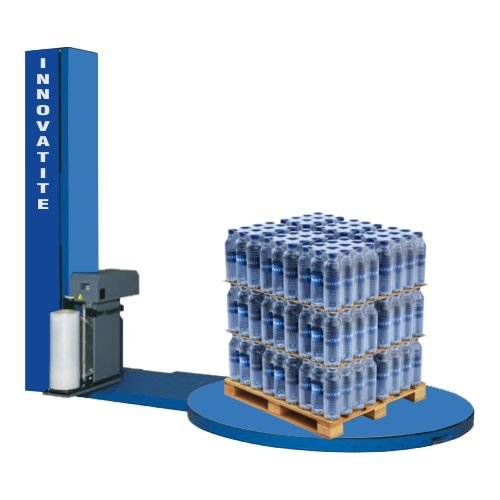
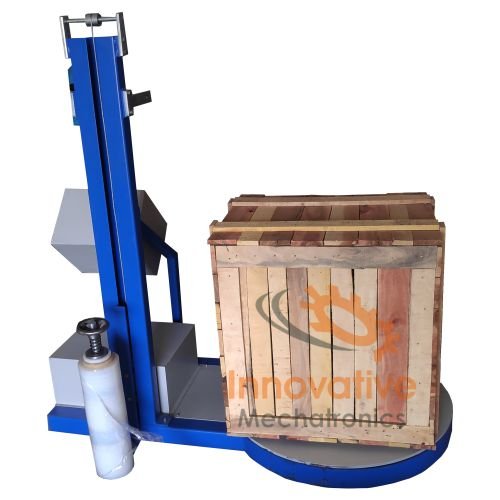
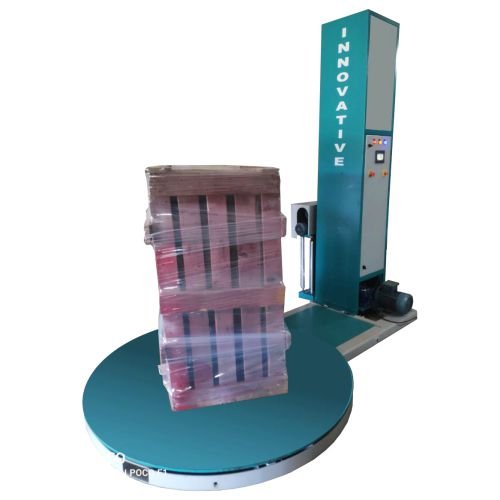
A Low Cost Pallet Wrapper is an economical stretch wrapping machine designed to secure palletized goods using stretch film. Manufacturers and logistics operators use this machine to stabilize loads, protect products from dust and moisture, and reduce transportation damage—without high capital investment.

Step-by-Step Working Process

  1. Load Placement – The operator places the pallet on the turntable or wrapping platform.

  2. Film Attachment – The operator manually attaches stretch film to the pallet base.

  3. Rotation Start – The machine rotates the pallet at a controlled speed.

  4. Film Stretching – The film carriage moves upward and downward while stretching the film around the load.

  5. Layer Control – The system applies extra wraps at the bottom and top for stability.

  6. Cycle Completion – The machine cuts or releases the film and stops automatically.

  7. Unload Pallet – The wrapped pallet is ready for storage or shipment.

This efficient cycle ensures consistent wrapping quality with minimal operator effort.

Why Is a Low Cost Pallet Wrapper Important in Modern Industrial Operations?

Modern industries demand speed, safety, and cost efficiency. A low cost pallet wrapper delivers all three.

  • Reduces manual labor and operator fatigue

  • Improves load stability during transport

  • Lowers film consumption and packaging waste

  • Increases packing speed and throughput

  • Delivers professional, uniform wrapping quality

For growing businesses, this machine provides automation benefits without high upfront costs.

Types and Variants of Low Cost Pallet Wrappers

1. Manual Low Cost Pallet Wrapper

  • Best for small warehouses and low-volume operations

  • Requires manual film cutting and cycle control

2. Semi-Automatic Pallet Wrapper

  • Ideal for medium production environments

  • Offers programmable wrapping cycles

3. Turntable Pallet Wrapper

  • Most economical and widely used design

  • Suitable for stable and uniform pallets

4. Mechanical Brake Film System

  • Controls film tension mechanically

  • Low maintenance and cost-effective

5. Pre-Stretch (Basic) Variant

Each variant suits different production needs and budgets.

Standard Industry-Level Technical Specifications

  • Turntable Diameter: 1500–1650 mm

  • Maximum Load Capacity: 1000–2000 kg

  • Wrapping Height: Up to 2200 mm

  • Film Width: 500 mm

  • Film Thickness: 17–30 microns

  • Power Supply: 220–240V / 50Hz

  • Installed Power: 1–1.5 kW

  • Control Panel: Push-button or basic PLC

Industries and Real-World Applications

Low cost pallet wrappers are widely used across industries, including:

  • FMCG and consumer goods

  • Food and beverage manufacturing

  • Pharmaceuticals and healthcare

  • Chemicals and lubricants

  • Textile and fabric mills

  • Warehousing and logistics centers

  • Paper, carton, and packaging plants

These industries rely on pallet wrappers to ensure safe and efficient material handling.

How to Choose the Right Low Cost Pallet Wrapper

Buyers should evaluate the following factors:

  • Capacity: Daily pallet volume and load weight

  • Material Type: Cartons, bags, drums, or irregular loads

  • Automation Level: Manual vs semi-automatic operation

  • Film Savings: Mechanical brake or basic pre-stretch

  • Available Space: Floor layout and machine footprint

  • Budget: Initial investment vs long-term savings

Selecting the right model ensures maximum ROI and operational reliability.

Conclusion

A Low Cost Pallet Wrapper delivers reliable pallet stability, reduced labor costs, and improved packaging efficiency. It serves as the ideal entry-level automation solution for modern industrial operations seeking performance without excessive investment.

Frequently Asked Questions (FAQs)

1. What is a Low Cost Pallet Wrapper?

A Low Cost Pallet Wrapper is an economical stretch wrapping machine that secures palletized loads using stretch film. It stabilizes products during storage and transportation while reducing manual labor and packaging costs.

2. How does a Low Cost Pallet Wrapper work?

The machine rotates the pallet while a film carriage wraps stretch film around the load. The carriage moves vertically to cover the entire pallet height, applying consistent tension to ensure load stability.

3. Which industries use Low Cost Pallet Wrappers?

Industries such as FMCG, food and beverage, pharmaceuticals, logistics, textiles, chemicals, paper, and warehousing commonly use Low Cost Pallet Wrappers for safe and efficient pallet packaging.

4. What types of loads can this machine wrap?

This machine wraps cartons, bags, boxes, drums, bottles, and other palletized goods with uniform or moderately uneven shapes.

5. Is a Low Cost Pallet Wrapper suitable for small businesses?

Yes. Small and medium-sized businesses prefer this machine because it provides automation benefits, improves packaging quality, and reduces labor costs without high capital investment.

Simple Pallet Wrapping Machine

Simple pallet wrapping machine for secure and cost-effective pallet packaging

Simple Pallet Wrapping Machine

A Simple Pallet Wrapping Machine is a semi-automatic stretch wrapping solution designed to secure palletized loads using stretch film. Manufacturers and logistics operators use this machine to stabilize products, reduce transit damage, and improve packaging consistency—without the complexity or cost of fully automatic systems.

Innovative WrapTech Pvt. Ltd. designs this machine for businesses that require reliable pallet protection, ease of operation, and low operating cost, while maintaining industrial-grade durability.

Why This Machine Is Critical in Modern Industrial Operations

Modern warehouses and factories demand speed, safety, and cost efficiency. Manual pallet wrapping fails to meet these expectations.

A Simple Pallet Wrapping Machine:

For growing operations, it provides a practical step toward automation.

Types and Variants Available

Turntable Pallet Wrapping Machine

  • Best for stable and uniform pallet loads

  • Most economical and widely adopted design

Mechanical Brake System

  • Ideal for cost-sensitive operations

  • Low maintenance and simple film tension control

Basic Pre-Stretch Variant

  • Reduces film consumption

  • Improves load holding force

Ramp-Equipped Models

  • Suitable for pallet trucks and forklifts

  • Eliminates lifting requirements

Each variant suits different throughput levels and operational layouts.

Industry-Level Technical Specifications

  • Turntable Diameter: 1500–1650 mm

  • Maximum Load Capacity: Up to 2000 kg

  • Wrapping Height: Up to 2200 mm

  • Film Width: 500 mm

  • Film Thickness: 17–30 microns

  • Power Supply: 220–240V / 50Hz

  • Installed Power: 1–1.5 kW

  • Control System: Push-button or PLC-based

Industries and Applications

Industries using Simple Pallet Wrapping Machines include:

  • FMCG and consumer goods

  • Food and beverage processing

  • Pharmaceuticals

  • Chemical and lubricant manufacturing

  • Textile and fabric mills

  • Warehousing and logistics

  • Paper, carton, and packaging plants

Why Manufacturers Prefer Professional-Grade Machines

Manufacturers avoid low-cost, non-industrial machines because they:

  • Fail under continuous operation

  • Increase downtime and maintenance costs

  • Deliver inconsistent wrapping quality

  • Compromise operator safety

Professional-grade machines from Innovative WrapTech Pvt. Ltd. deliver reliability, durability, and predictable performance.

A Simple Pallet Wrapping Machine from Innovative WrapTech Pvt. Ltd. is ideal for businesses seeking

  • Reliable pallet stability

  • Easy operation with minimal training

  • Reduced labor and packaging costs

  • A practical step toward automation

If your operation handles regular palletized shipments and values efficiency, safety, and long-term reliability, this machine meets your operational needs.

Frequently Asked Questions (FAQs)

1. What is a Simple Pallet Wrapping Machine?

A Simple Pallet Wrapping Machine is a semi-automatic stretch wrapping machine that secures palletized loads with stretch film. It stabilizes products, protects them from dust and moisture, and ensures safe transportation.

2. How does a Simple Pallet Wrapping Machine work?

The operator places the pallet on the turntable, attaches the stretch film, and starts the machine. The turntable rotates while the film carriage moves vertically, wrapping the load evenly with controlled tension. The cycle finishes automatically, leaving the pallet securely wrapped.

3. Which industries use this machine?

Industries including FMCG, food and beverage, pharmaceuticals, chemicals, textiles, warehousing, logistics, and paper & packaging use Simple Pallet Wrapping Machines for consistent and secure pallet packaging.

4. What types of loads can it handle?

It can handle cartons, bags, boxes, drums, bottles, and other palletized goods, whether uniform or moderately uneven in shape.

5. Is this machine suitable for small businesses?

Yes. Its simple operation and affordable cost make it ideal for small to medium-sized operations seeking automation without high capital investment.

Coil Wrapping Machine Manufacturer

Coil wrapping machine manufactured by Innovative WrapTech Pvt. Ltd. for industrial packaging

Coil Wrapping Machine Manufacturer

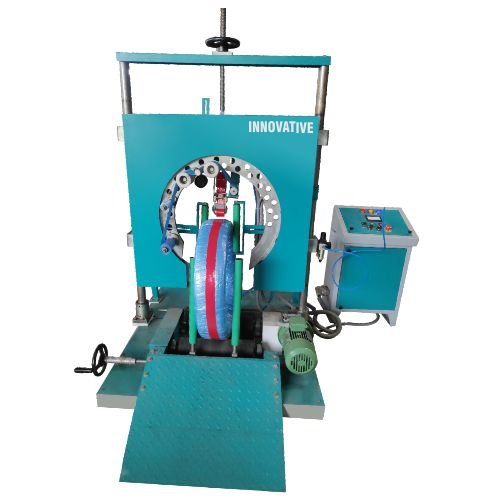
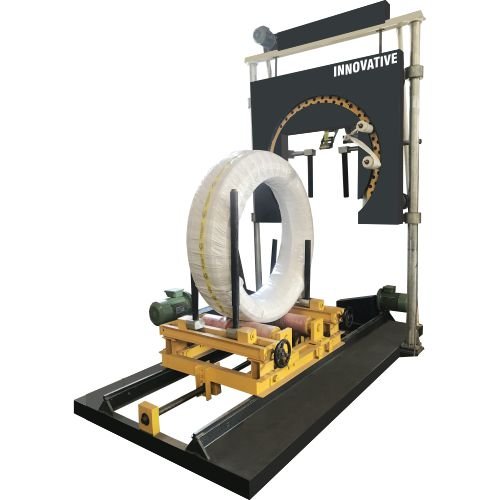
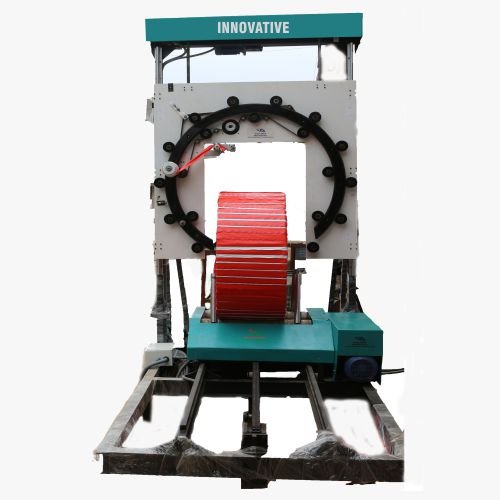
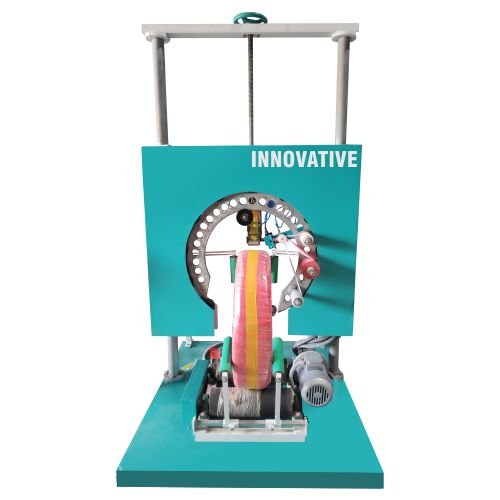
A Coil Wrapping Machine is an industrial-grade packaging solution designed to secure metal, paper, textile, or other cylindrical coils with protective stretch or shrink film. It ensures load stability, surface protection, and safe transportation, reducing manual labor and packaging costs.

Innovative WrapTech Pvt. Ltd. manufactures high-performance coil wrapping machines for factories, warehouses, and export-oriented industries, offering reliable, uniform, and cost-effective packaging.

How the Coil Wrapping Machine Works

  1. Coil Placement
    The operator positions the coil on the rotating turntable, cradle, or loading platform.

  2. Film Attachment
    The stretch or shrink film is manually attached to the coil base.

  3. Cycle Initiation
    The operator starts the wrapping cycle via a push-button or PLC control.

  4. Rotation & Wrapping
    The turntable rotates the coil while the film carriage moves vertically to wrap the coil evenly.

  5. Tension Control
    The machine applies consistent film tension to secure the load without deformation.

  6. Cycle Completion
    The film cuts or releases automatically; the machine stops after completing the programmed wraps.

  7. Coil Removal
    The wrapped coil is ready for storage, transport, or export.

This automated process ensures consistent wrapping quality and reduces labor dependency.

Why Coil Wrapping Machine Manufacturer Are Critical in Industrial Operations

Modern industrial operations demand efficiency, safety, and cost-effectiveness. A coil wrapping machine:

  • Prevents coil surface damage and corrosion

  • Reduces manual labor and operator fatigue

  • Minimizes film waste and packaging costs

  • Increases load stability during transport

  • Delivers uniform, professional-grade wrapping

  • Supports high-volume production without compromising quality

Key Technical Features and Operational Benefits

FeatureBenefit
Variable turntable speedPrevents coil shifting and damage
Adjustable film tensionEnsures uniform wrapping, saves film
PLC control or push-button interfaceReliable, repeatable operation
Emergency stop and safety guardsProtects operators during operation
Heavy-duty industrial frameSupports continuous operation
Photo-eye height sensorDetects coil height accurately for precise wrapping

Installation, Operation, and Maintenance Best Practices

Installation:

  • Install on flat, reinforced flooring

  • Ensure electrical grounding and power compliance

  • Maintain adequate clearance around the machine

Daily Operation:

Weekly Maintenance:

  • Inspect belts, tension systems, and mechanical components

  • Clean turntable, sensors, and film guides

Long-Term Maintenance:

  • Calibrate speed and tension settings quarterly

  • Replace worn mechanical or electrical parts

  • Perform full inspection every 6–12 months

Why Manufacturers Prefer Professional-Grade Machines

Low-cost alternatives often fail under continuous industrial operation, causing:

Professional-grade machines from Innovative WrapTech Pvt. Ltd. ensure durable, reliable, and high-performance operation.

A Coil Wrapping Machine from Innovative WrapTech Pvt. Ltd. offers

  • Safe, consistent, and high-quality coil packaging

  • Easy operation and minimal operator training

  • Cost savings in labor, material, and transport damage

  • Scalable automation for future factory integration

For high-volume industrial coil operations, this machine provides efficiency, safety, and long-term reliability.

Frequently Asked Questions (FAQs)

1. What is a Coil Wrapping Machine?

A Coil Wrapping Machine is an industrial machine designed to securely wrap cylindrical coils with stretch or shrink film. It protects coils during storage, handling, and transport while reducing manual labor and packaging waste.

2. How does a Coil Wrapping Machine work?

The operator places the coil on the turntable or cradle, attaches the film, and starts the cycle. The machine rotates the coil while the film carriage moves vertically, wrapping the coil evenly with controlled tension. The cycle finishes automatically, leaving a fully wrapped coil.

3. Which industries use Coil Wrapping Machines?

Industries using these machines include steel, aluminum, copper, paper, textile, chemicals, plastics, and logistics. Any operation handling heavy or large-diameter coils benefits from consistent coil wrapping.

4. What types of coils can it wrap?

It can handle steel, aluminum, copper, paper, textile, and plastic coils of various diameters, widths, and weights, including both uniform and irregular shapes.

5. Is a Coil Wrapping Machine suitable for small businesses?

Yes. Semi-automatic models offer affordable, easy-to-use solutions for small to medium-scale operations that need reliable coil packaging without high automation costs.

Lateral Pipe Wrapping Machine

Lateral Pipe Wrapping Machine for safe industrial pipe packaging

Lateral Pipe Wrapping Machine

The Lateral Pipe Wrapping Machine is an industrial packaging machine designed to wrap pipes securely and efficiently with stretch or shrink film. It stabilizes pipes during storage, transport, or export and protects them from dust, moisture, scratches, and damage.

Key benefits:

  • Improves packaging consistency – Each pipe is wrapped uniformly.

  • Reduces manual labor – Operators no longer manually wrap heavy or long pipes.

  • Cost-effective – Saves on packaging material and labor expenses.

  • Supports industrial workflows – Suitable for small, medium, and large-scale pipe manufacturers.

This machine is critical in modern industrial operations because it improves safety, reduces damage, and enhances operational efficiency, all while maintaining low operational costs.

How to Choose the Right Machine

When selecting a Lateral Pipe Wrapping Machine, consider:

FactorWhat to EvaluateWhy It Matters
CapacityMaximum pipe length, diameter, and weightEnsures the machine handles your production requirements without downtime
MaterialFilm type: stretch or shrinkImpacts load protection, cost, and wrapping consistency
AutomationManual, semi-automatic, or fully automaticHigher automation reduces labor requirements and increases throughput
BudgetInitial cost and operating expensesAligns with ROI and long-term business planning
IntegrationAbility to connect with production lines or ERPSupports automation and smart factory workflows

Choosing the right model ensures maximum productivity, safety, and ROI.

Why Manufacturers Prefer Professional-Grade Machines

  • Durability: Designed for continuous industrial use without frequent maintenance.

  • Consistency: Uniform wrapping prevents pipe damage and improves product presentation.

  • Efficiency: Reduces time per pipe compared to manual wrapping methods.

  • Future-ready: Can integrate with semi-automatic or fully automatic upgrades for high-volume operations.

Low-cost alternatives often fail under continuous industrial operation, causing downtime, repair costs, and inconsistent wrapping quality.

Safety Standards, Compliance, and Operator Protection

Innovative WrapTech designs the Lateral Pipe Wrapping Machine to meet industrial safety standards:

  • CE-compliant and ISO-certified manufacturing

  • Emergency stop buttons for operator protection

  • Mechanical guarding to prevent accidental contact with moving parts

  • Stable base and ergonomic controls reduce operator strain

These features protect operators while ensuring compliance with industrial safety regulations.

Frequently Asked Questions (FAQs)

What are the energy and power requirements of the machine?

The Lateral Pipe Wrapping Machine typically requires 220–380V single or three-phase power, depending on model size. Energy-efficient motors reduce operating costs, improving sustainability and ROI.

How long is the expected service life of the machine?

With proper maintenance, the machine can operate reliably for 8–12 years, making it a long-term investment for pipe manufacturers.

What are the common troubleshooting issues and quick fixes?

  • Film tearing: Adjust tension or replace worn rollers.

  • Turntable or carriage not moving: Check motor connections or electrical supply.

  • Uneven wrapping: Inspect carriage alignment and adjust speed settings.

Can the machine be integrated with existing production lines or ERP systems?

Yes. Many models offer optional sensors and PLC integration, enabling connection to conveyor lines, warehouse management systems, or ERP software for automation and smart factory operations.

How does the machine impact labor costs and workforce efficiency?

It reduces the physical effort required to wrap pipes manually, allowing one operator to wrap multiple pipes faster. This reduces labor costs and improves productivity without increasing headcount.