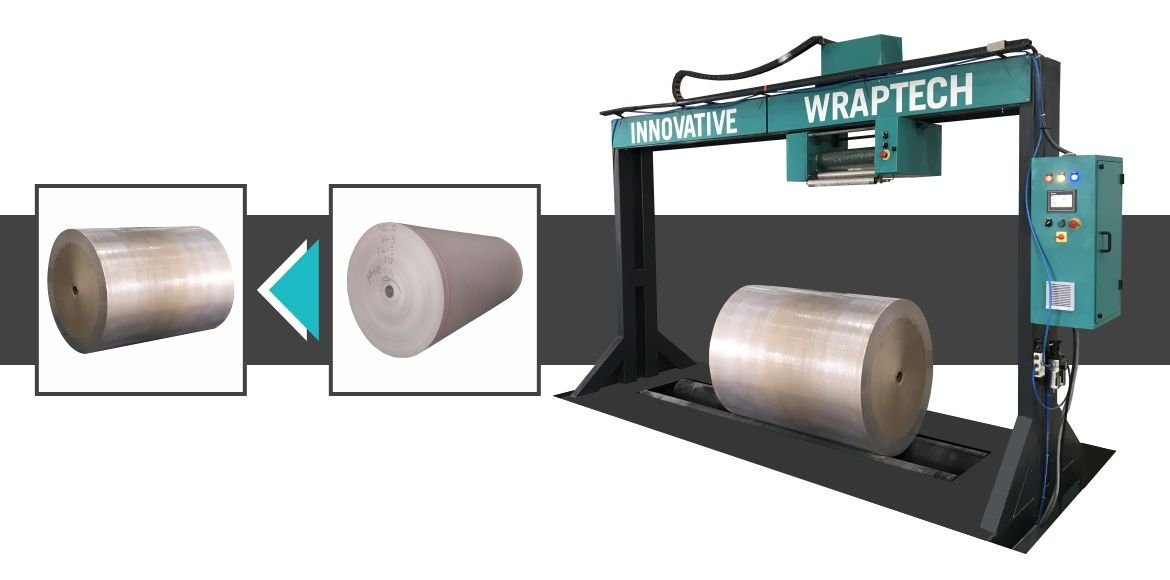
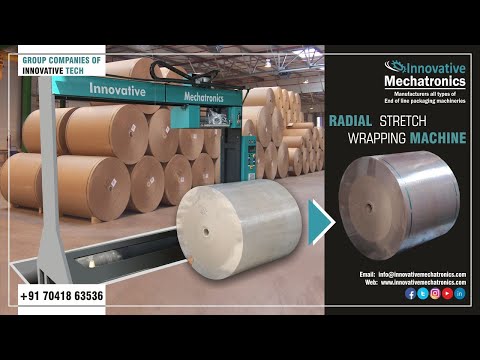
Product Extra DetailA Paper Roll Stretch Wrapper is an advanced industrial packaging machine designed to securely wrap paper rolls using stretch film. This machine protects paper rolls from moisture, dust, edge damage, tearing, and handling impact during storage and transportation.
Innovative WrapTech Pvt. Ltd. designs its Paper Roll Stretch Wrapping Machine to handle lightweight to heavy jumbo paper rolls with precision, consistency, and high wrapping efficiency. The machine ensures uniform film tension, tight wrapping, and professional finish—critical for paper mills, printing units, packaging plants, and logistics operations.
Why This Machine Is Important in Modern Industrial Operations
Modern industries demand speed, consistency, safety, and cost control. Manual or semi-manual wrapping fails to meet these requirements. A Paper Roll Stretch Wrapping Machine solves these challenges by:
Preventing product damage during transit and storage
Reducing material waste through controlled film usage
Increasing packing speed and operational efficiency
Maintaining consistent wrapping quality across all rolls
Lowering labor dependency and fatigue
Improving warehouse and logistics workflow
In high-volume paper production environments, this machine plays a critical role in protecting finished goods, reducing returns, and maintaining brand reputation.
How to Choose the Right Paper Roll Stretch Wrapping Machine
Selecting the correct machine directly impacts productivity and ROI. Manufacturers should evaluate the following factors:
1. Capacity Requirements
Choose a machine based on:
High-capacity plants benefit from fully automatic systems, while medium operations may prefer semi-automatic models.
2. Material Compatibility
Ensure the machine supports:
Innovative WrapTech machines accommodate varied roll sizes and densities without compromising wrap quality.
3. Level of Automation
Automation level depends on production scale:
Manual loading for low-volume plants
Semi-automatic for balanced cost and efficiency
Fully automatic with conveyors for continuous production lines
Automation improves consistency, reduces human error, and increases throughput.
4. Budget and Long-Term Value
While initial cost matters, manufacturers should consider:
Film savings
Reduced labor cost
Lower product damage
Minimal maintenance
Innovative WrapTech Pvt. Ltd. delivers high ROI machines with durable construction and low operating costs.
(FAQ)
1. What industries use Paper Roll Stretch Wrappers?
Paper mills, printing presses, packaging units, tissue manufacturers, and logistics companies use these machines extensively.
2. Can the machine handle heavy jumbo paper rolls?
Yes. Innovative WrapTech machines are engineered to wrap heavy and oversized paper rolls safely and efficiently.
3. Does stretch wrapping protect against moisture?
Yes. Stretch film provides an effective moisture and dust barrier, preserving paper quality during transport.
4. Is the machine customizable?
Yes. Innovative WrapTech Pvt. Ltd. offers customized solutions based on roll size, weight, and automation needs.
5. How does this machine reduce packaging costs?
It optimizes film usage, reduces labor, minimizes product damage, and improves packing speed—lowering overall costs.