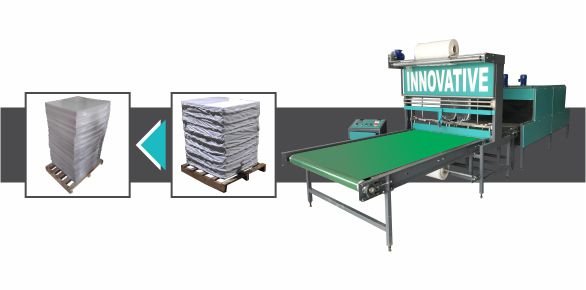
Product Extra DetailA Shrink Wrapping Packing Machine is an industrial system that automatically wraps and seals products using heat-shrinkable film, producing tight, secure, and professional packaging.
This machine combines shrink wrapping and packing functions in a single unit, allowing manufacturers to increase throughput, reduce labor, and maintain consistent product quality.
Industries that use these machines include food & beverages, pharmaceuticals, FMCG, electronics, and e-commerce packaging operations.
How Does a Shrink Wrapping Packing Machine Operate?
Product Infeed
Products enter the machine through a conveyor or feeder system. Alignment guides and sensors position each item precisely.
Film Feeding & Tension Control
Shrink film (POF/LDPE) is automatically fed from rolls. Servo motors ensure uniform tension to avoid wrinkles or breakage.
Wrapping & Sealing
The machine wraps each product and uses heat-sealing units to cut and seal the film edges. The result is strong, uniform seals.
Heat Shrinking
Wrapped products pass through a shrink tunnel where hot air evenly shrinks the film to the product’s contours.
Packing & Discharge
Products are grouped, packed, and discharged via the outfeed conveyor, ready for boxing, palletizing, or direct shipment.
Why This Machine Is Critical in Modern Industrial Operations
High-speed production: Handles large volumes efficiently
Consistent quality: Eliminates human error in sealing and packing
Product protection: Prevents tampering, dust, and moisture exposure
Cost efficiency: Reduces labor and material waste
Compliance: Meets ISO, CE, and industrial safety standards
Manual wrapping and packing cannot match the speed, uniformity, or reliability of these automated systems.
Types and Variants of Shrink Wrapping Packing Machines
| Type | Ideal Use | Advantages |
|---|
| Fully Automatic Machine | Large-volume production | Max speed, minimal labor, high consistency |
| Semi-Automatic Machine | Medium-output production | Flexible, cost-effective, easy operation |
| L-Sealer Machine | Odd-shaped products & cartons | Accurate sealing, professional finish |
| Continuous Motion Machine | Ultra-high-speed lines | Continuous operation, minimal downtime |
Key Technical Features and Operational Benefits
Servo-driven conveyors: Smooth, precise product handling
PLC-based automation: Error-free, repeatable operation
Automatic size adjustment: Reduces downtime during product changeovers
High-speed shrink tunnels: Uniform heat distribution for quality wrapping
Optional vision inspection: Detects defective seals or misaligned packs
Benefits: Increased throughput, reduced rejects, consistent aesthetics, and enhanced operator safety.
Standard Industry-Level Technical Specifications
Production capacity: 15–120 packs/min (depending on type)
Film type: POF / LDPE
Power supply: 220–440V, 50/60 Hz
Operating temperature: 100–250°C for shrink tunnel
Machine dimensions: 2–6 m length, 1–2 m width
Automation: Semi-automatic to fully automatic
Weight: 500–1500 kg
Installation, Operation, and Maintenance Best Practices
Installation
Level, vibration-free flooring
Adequate electrical supply and grounding
Space for maintenance and inspection
Controlled temperature and humidity for optimal film performance
Daily Operation
Clean debris from conveyor and sealing areas
Inspect belts, sensors, and emergency stops
Monitor tunnel temperature and sealing units
Weekly Maintenance
Long-Term Maintenance
Replace wear parts based on usage hours
Conduct electrical and safety audits
Upgrade firmware and control systems
Frequently Asked Questions (FAQs)
1. What products can this machine handle?
The machine can wrap and pack a wide range of products including bottles, cartons, boxes, tiles, batteries, wires, and boards, providing uniform, dust-proof, and tamper-evident shrink packaging.
2. Can it handle multiple product sizes?
Yes. Adjustable guides, conveyors, and shrink tunnel settings allow handling of different product sizes and shapes efficiently.
3. Which shrink films are compatible?
It works with Polyolefin (POF), Polyethylene (PE), and PVC films. POF is preferred for clarity, durability, and professional presentation.
4. What is the production capacity?
Depending on the model, it can wrap and pack 500–3,000 units per hour, suitable for small, medium, and high-volume production lines.
5. How does automation reduce operational costs?
Automation reduces labor requirements, minimizes film wastage, prevents packaging errors, and increases throughput, resulting in lower overall production costs and consistent packaging quality.