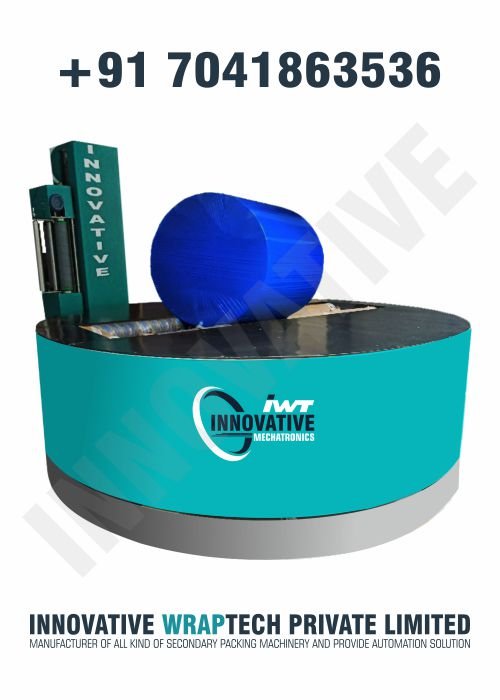
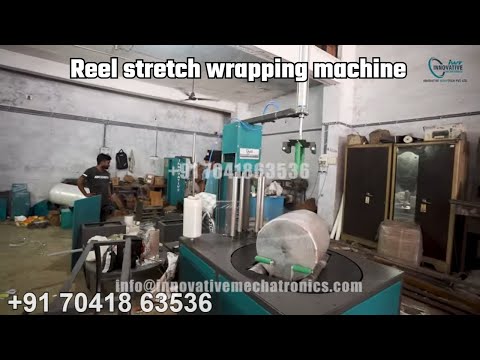
Product Extra DetailWhat Is an Axial Wrapping Machine?
An Axial Wrapping Machine is an industrial packaging system designed to wrap long, cylindrical, or ring-shaped products such as steel coils, copper coils, pipes, rods, hoses, aluminum profiles, and wire bundles using stretch film, HDPE, VCI film, or woven material.
Unlike pallet wrapping machines that rotate the load, axial wrapping machines pass the product through a rotating wrapping ring. The wrapping material rotates around the product’s axis, creating tight, uniform coverage across the entire surface.
Manufacturers use axial wrapping machines in heavy-duty industrial environments where product protection, corrosion prevention, and transport stability are critical.
How an Axial Wrapping Machine Works
We design the machine to ensure controlled tension, precise overlap, and repeatable wrapping quality.
Step 1: Product Loading
The operator places the coil or long product on infeed rollers or conveyor support.
Step 2: Position Alignment
Sensors detect product position and center alignment.
Step 3: Wrapping Ring Rotation
The wrapping ring rotates at high speed around the product.
Step 4: Material Dispensing
Stretch film or packing material feeds through tension-controlled rollers.
Step 5: Axial Movement
The product moves forward through the rotating ring while wrapping occurs simultaneously.
Step 6: Overlap Control
The PLC controls wrapping pitch and overlap percentage (typically 30–70%).
Step 7: Cutting & Sealing
The machine cuts and secures the wrapping material automatically.
Step 8: Outfeed Transfer
The wrapped product moves to the discharge area.
This process ensures tight, uniform wrapping without damaging the product surface.
Why Axial Wrapping Machines Are Important in Modern Industry
Manual wrapping creates inconsistent tension, loose packaging, and higher labor cost. In industrial export environments, this causes:
Product corrosion
Transit damage
Film wastage
Operator fatigue
Slower dispatch
Axial wrapping machines eliminate these risks by delivering:
Modern factories prioritize automation, repeatability, and labor optimization. Axial wrapping machines support all three.
Types of Axial Wrapping Machines
1. Semi-Automatic Axial Wrapper
Used for moderate production volumes.
Operator assists loading and unloading.
Best for: Small to mid-size factories.
2. Fully Automatic Axial Wrapper
Integrated with conveyor lines and robotic handling.
Best for: High-volume steel plants and export facilities.
3. Coil Wrapping Machine
Specialized for steel, copper, and aluminum coils.
Best for: Metal processing industries.
4. Pipe & Rod Wrapping Machine
Designed for long cylindrical products.
Best for: Infrastructure and construction material plants.
5. Horizontal Ring Wrapping Machine
Wraps long items like doors, panels, and profiles.
Best for: Furniture and extrusion industries.
Key Technical Features & Real Operational Benefits Axial Wrapping Machine Manufacturer
| Technical Feature | Operational Benefit |
|---|
| PLC Control Panel | Repeatable and programmable wrapping |
| Adjustable Ring Speed | Suitable for different materials |
| Pre-Stretch System | Reduces film consumption by 30–50% |
| Soft Start/Stop Drive | Protects fragile products |
| Tension Control System | Prevents product deformation |
| Roller Conveyor System | Smooth product handling |
| Automatic Cutter | Improves cycle time |
Standard Technical Specifications
Typical Industrial Range:
Ring Diameter: 400 mm – 2000 mm
Wrapping Speed: 20–90 RPM
Film Width: 100–500 mm
Power Supply: 380V / 415V / 440V
Load Capacity: Up to 5 Tons (customizable)
Control System: PLC with HMI
Automation Level: Semi / Fully Automatic
Specifications vary depending on product size and industry requirements.
Industries & Applications
Axial wrapping machines are widely used in:
Steel coil processing plants
Copper and aluminum industries
Pipe manufacturing
Cable and wire industries
Hose production units
Textile yarn industries
Construction material suppliers
Automotive component manufacturers
Export-oriented units rely heavily on this machine to meet international packing standards.
How to Choose the Right Machine
Consider These Factors:
1. Product Dimensions
Outer diameter, width, weight.
2. Production Capacity
Pallets per shift or coils per hour.
3. Wrapping Material Type
Stretch film, HDPE, woven cloth, VCI.
4. Automation Level
Manual loading vs. fully automated line integration.
5. Budget vs ROI
Higher automation increases initial cost but reduces labor and film usage.
Common Operational Problems & Solutions
| Problem | Machine Solution |
|---|
| Uneven wrapping | PLC-controlled overlap |
| Film breakage | Tension adjustment system |
| Surface scratches | Soft roller support |
| Loose packing | Pre-stretch tension control |
| Slow production | High-speed ring rotation |
The machine standardizes the entire process and eliminates dependency on manual skill.
Installation Best Practices
Install on level industrial flooring
Ensure stable power supply
Maintain adequate product movement space
Verify electrical earthing
Conduct trial wrapping before production
Professional installation reduces future downtime.
Why Choose Innovative Wraptech Pvt. Ltd.?
Innovative Wraptech Pvt. Ltd. is a trusted and leading manufacturer of industrial packaging systems. Since 1992, our Ahmedabad-based facility has delivered high-speed, heavy-duty axial wrapping machines designed to perform reliably in demanding 24/7 production environments across India and global markets.
We don’t just supply standard equipment; we engineer customized automation solutions that protect your heavy metal coils, pipes, and industrial components during long transit and export shipments.
Key Customer Advantages:
Up to 40% Film Savings: Integrated pre-stretch technology minimizes material wastage and dramatically reduces recurring operational costs.
Heavy-Duty Operations: Built to easily handle loads up to 5 tons, ensuring continuous and stable performance for steel mills and infrastructure manufacturing.
Advanced Controls: Standard programmable PLC systems with intuitive touch-screen HMI allow operators to set exact tension profiles and wrapping pitches.
End-to-End Support: Comprehensive layout planning, seamless production line integration, and dependable after-sales engineering assistance.
Product Overview & Specifications
Here is a quick-reference summary of the technical capabilities offered across our axial wrapper lineup:
| Parameter | Industrial Range |
| Ring Diameter | 400 mm – 2000 mm |
| Wrapping Speed | 20 – 90 RPM |
| Film Width | 100 – 500 mm |
| Load Capacity | Up to 5 Tons (Customizable) |
| Control System | PLC with intuitive HMI touchscreen |
| Power Supply | 380V / 415V / 440V |
Operational Troubleshooting At A Glance
Pro-Tip: Standardizing your wrap overlap via the PLC panel eliminates operator guesswork and protects heavy or sharp profiles from shifting during maritime export.
Uneven Wrapping? → Solution: Utilize the programmable PLC-controlled pitch adjustment.
Frequent Film Breakers? → Solution: Fine-tune the dynamic tension control system to match your micron film rating.
Surface Scratches on Delicate Metals? → Solution: Opt for our specialized polyurethane soft-roller support variants.
Ready to optimize your packaging line? [Request a custom quote today]
Conclusion
An Axial Wrapping Machine is not optional for modern industrial packaging. It ensures:
Product protection
Operational efficiency
Cost reduction
Export compliance
Workplace safety
Frequently Asked Questions (FAQ)
1. What is an axial wrapping machine used for?
It wraps coils, pipes, rods, hoses, and other long industrial products using stretch film or protective material to prevent damage during storage and transportation.
2. How is axial wrapping different from pallet wrapping?
In pallet wrapping the load rotates, while in axial wrapping the wrapping ring rotates around the product, making it suitable for cylindrical and long items.
3. Can the machine handle heavy metal coils?
Yes. Heavy-duty models are designed to wrap multi-ton steel, copper, and aluminum coils without deforming the product.
4. Does the machine reduce packaging cost?
Yes. Pre-stretch film systems reduce film consumption and minimize manual labor, lowering overall packing cost.
5. Is operator skill required to run the machine?
No. PLC-based controls allow operators to select preset programs and run automatic wrapping cycles easily after basic training.
6. Can it be integrated into an automatic production line?
Yes. Fully automatic axial wrapping machines can connect with conveyors, strapping machines, and dispatch lines.
7. What wrapping materials can be used?
Stretch film, HDPE film, woven fabric, VCI film, paper wrapping, and protective laminated materials can all be used.
8. What maintenance does the machine require?
Regular cleaning, lubrication of bearings, checking tension rollers, and electrical inspection keep the machine running reliably.
9. Is the machine safe for operators?
Yes. It includes safety guards, emergency stop buttons, sensors, and controlled start-stop systems to prevent accidents.
10. How long does an Axial Wrapping Machine Manufacturer last?
With proper maintenance, an industrial-grade machine typically operates efficiently for 8–12 years or more.