Products

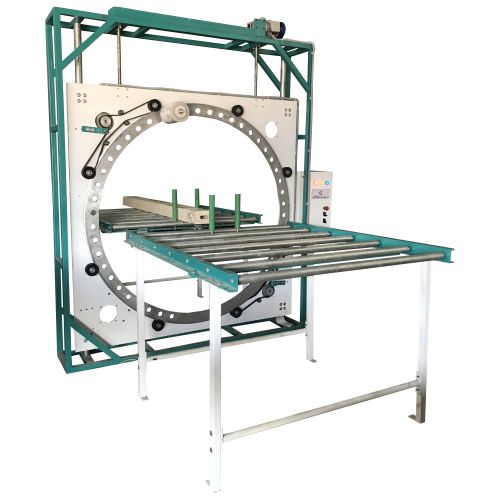
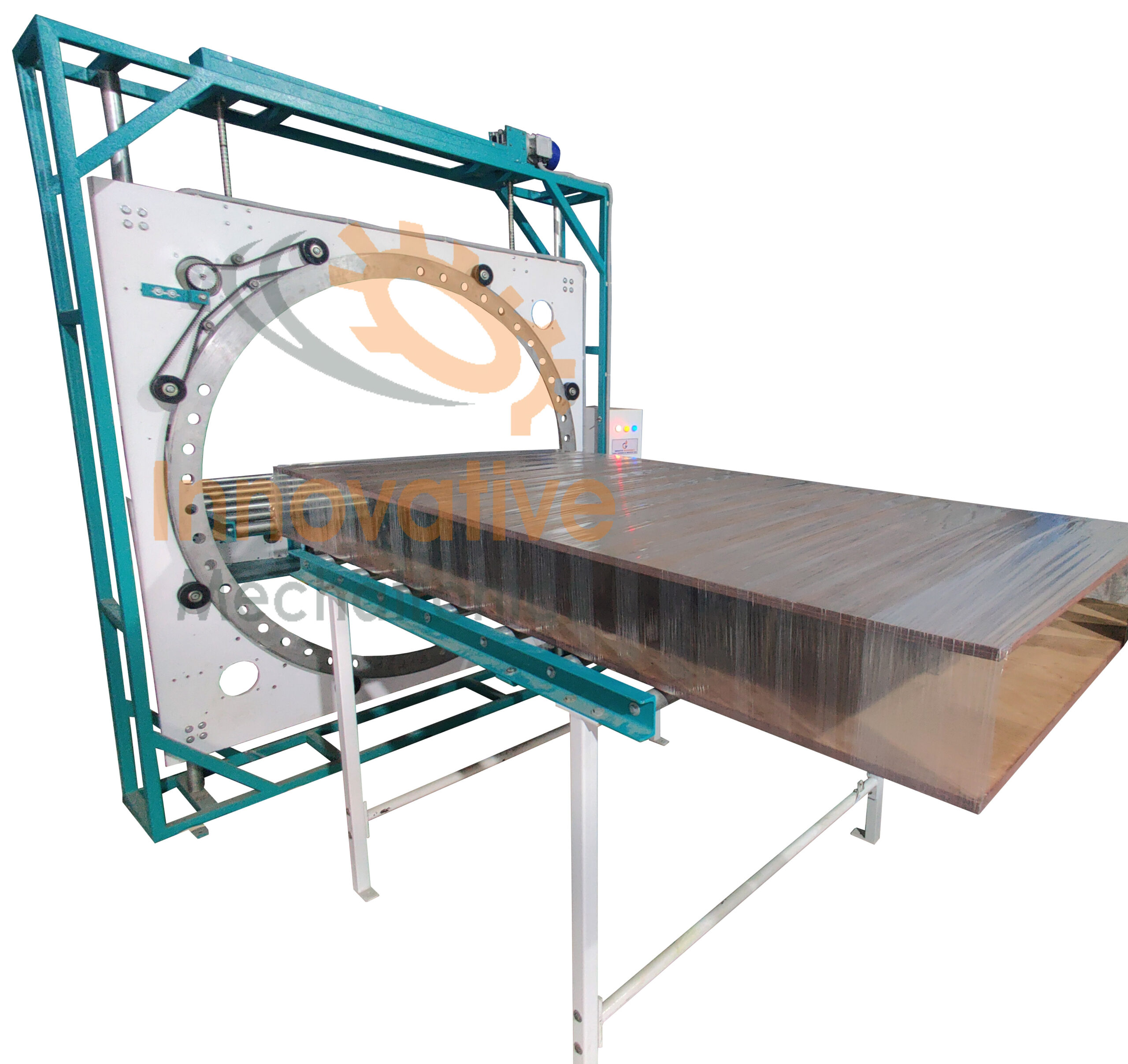
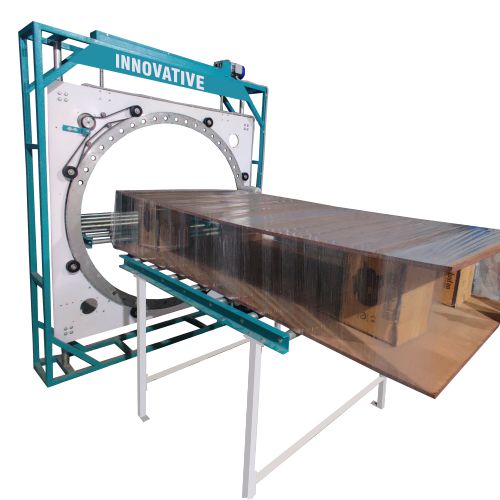
Solid Door Frames & Edge Band Packing Machine

Automatic packing machine wrapping solid door frames and edge bands with protective film in industrial packaging line

Door Frame Packing Machine

A Door Frame Packing Machine is an industrial packaging solution designed to wrap solid door frames, wooden frames, metal frames, and edge band materials using stretch film, protective film, paper, or foam-laminated materials. The machine applies uniform tension and controlled overlap to protect edges, corners, and surfaces during handling, storage, and transportation.

Manufacturers use this machine to achieve consistent, damage-free, and professional packaging at scale.

Why Is This Machine Important in Modern Industrial Operations?

Door frames are long, rigid, and edge-sensitive products. Manual packing often causes scratches, dents, and inconsistent protection. This machine:

  • Prevents surface and edge damage

  • Improves packaging speed and consistency

  • Reduces labor dependency and fatigue

  • Minimizes material wastage

  • Enhances logistics and transport safety

  • Supports export-grade packaging standards

Modern manufacturers rely on automation to maintain quality, efficiency, and brand reputation.

Types & Variants of Door Frame Packing Machines

Manual Door Frame Packing System

  • Best for very low volumes

  • High labor involvement

  • Limited consistency

Semi-Automatic Door Frame Packing Machine

  • Manual loading with automated wrapping

  • Ideal for small to medium factories

  • Cost-effective and reliable

Fully Automatic Door Frame Packing Machine

  • Conveyor-integrated system

  • Designed for high-volume production

  • Maximum speed and minimal manpower

Horizontal Packing Machine

How Buyers Can Choose the Right Model

Capacity

Select based on daily production output and frame size.

Material Type

Choose compatible film systems for wood, metal, or laminated surfaces.

Automation Level

  • Manual: Very small workshops

  • Semi-automatic: Growing factories

  • Fully automatic: Large-scale plants

Budget

Balance upfront cost with long-term labor and material savings.

Floor Space

Horizontal machines suit long layouts; compact designs suit smaller floors.

Best Practices for Installation, Operation & Maintenance

Installation

Operation

  • Set correct film tension and overlap

  • Use suitable film thickness

  • Train operators on control systems

Maintenance

  • Clean rollers and sensors daily

  • Lubricate moving parts weekly

  • Inspect motors, belts, and cutters regularly

  • Schedule preventive maintenance every 6–12 months

Conclusion

A Door Frame Packing Machine delivers consistent protection, faster throughput, and lower operational risk. It is an essential investment for manufacturers seeking quality, efficiency, and scalability in modern production environments.

FAQs

1. What is a Door Frame Packing Machine?

A Door Frame Packing Machine is an industrial packaging system that wraps solid wooden, metal, or composite door frames and edge bands with protective film to prevent damage during handling, storage, and transportation.

2. Which materials can this machine pack?

The machine packs solid wood frames, engineered wood frames, metal door frames, PVC frames, laminated frames, and edge band materials.

3. How does a door frame packing machine work?

The machine feeds the frame through rollers while an orbital wrapping ring applies film with controlled tension and overlap, ensuring full surface and edge protection.

4. Why is automated door frame packing better than manual packing?

Automated packing provides uniform wrapping, reduces labor effort, improves speed, minimizes material waste, and protects delicate edges more effectively than manual methods.

5. What types of packing films does the machine support?

The machine supports stretch film, LDPE film, foam-laminated film, protective paper, and surface-protection films based on application needs.
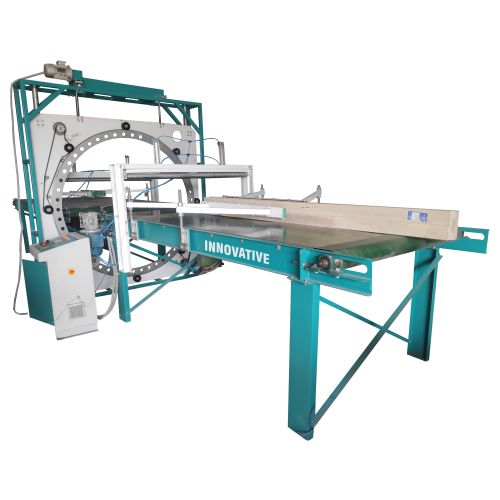
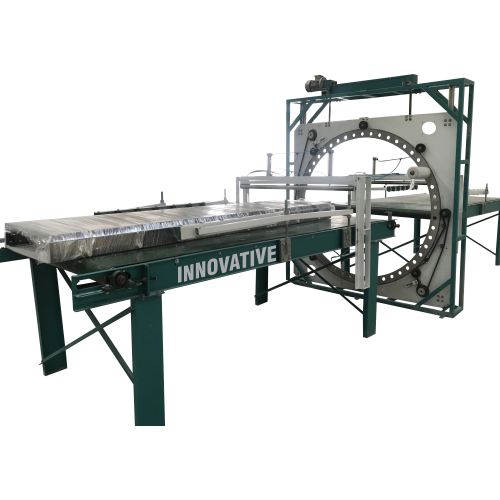
Big Door Stretch Packing Machine

Automatic big door stretch packing machine wrapping large wooden doors with protective stretch film in industrial packaging line

Big Door Stretch Packing Machine

A Big Door Stretch Packing Machine is an industrial packaging system designed to wrap large, heavy doors—wooden, metal, or composite—using stretch film or protective laminates. It ensures uniform coverage, corner protection, and edge safety, reducing damage during storage, handling, and transportation.

Manufacturers use this machine to replace manual packing, providing repeatable, high-quality, and export-ready packaging.

How It Works: Step-by-Step

  1. Door Loading
    Operators or conveyors place the large door onto the infeed platform or rollers.

  2. Door Alignment & Positioning
    Sensors align the door centrally to ensure even wrapping across the full surface.

  3. Film Feeding & Tension Control
    The machine feeds stretch film through a pre-stretch or tensioning system to optimize material usage and protect the door finish.

  4. Wrapping Rotation
    The wrapping arm or orbital ring rotates around the door while either the door or the arm moves, providing full coverage.

  5. Edge & Corner Protection
    Controlled tension ensures film covers edges and corners without scratching or denting the door surface.

  6. Film Cutting & Sealing
    Automatic cutters finish the wrap neatly, securing the film without manual intervention.

  7. Outfeed & Stacking
    The wrapped door exits the machine, ready for storage, dispatch, or palletization.

Types & Variants

TypeApplication
Manual Big Door WrapperLow-volume workshops; requires operator labor
Semi-AutomaticMedium-volume production; manual loading, automated wrapping
Fully AutomaticHigh-volume operations; minimal human intervention, conveyor-integrated
Horizontal Wrapping SystemFor long, heavy doors; provides stable, vibration-free wrapping

Standard Industry-Level Specifications

  • Door Length: 1800 – 3000 mm

  • Door Width: 600 – 1200 mm

  • Max Load: 50 – 600 kg

  • Wrapping Speed: 5 – 20 doors/hour

  • Film Type: Stretch film, LDPE, foam-laminated film

  • Power Supply: 380 / 415 V, 50 Hz, 3 Phase

  • Control System: PLC with touchscreen HMI

How to Choose the Right Machine

  • Capacity: Match speed and throughput with production volume

  • Door Size & Weight: Select heavy-duty rollers and motors accordingly

  • Material Type: Ensure compatibility with wood, metal, or laminated surfaces

  • Automation Level: Manual, semi-automatic, or fully automatic depending on production scale

  • Budget: Consider ROI from labor savings, material savings, and reduced damage

  • Floor Space: Horizontal or vertical systems depending on available space

Conclusion

A Big Door Stretch Packing Machine delivers uniform protection, faster throughput, and operational safety. It is an essential investment for manufacturers producing large, heavy doors who want high-quality, consistent, and efficient packaging.

FAQs

1. What is a Big Door Stretch Packing Machine?

It is an industrial packaging system that wraps large and heavy doors with stretch film or protective laminates, ensuring surface and edge protection during storage, handling, and transportation.

2. Which materials can this machine handle?

The machine can pack wooden doors, metal doors, laminated doors, PVC doors, composite doors, and edge band materials.

3. How does a big door stretch packing machine work?

The machine aligns the door, feeds stretch film with controlled tension, rotates the wrapping arm or orbital ring around the door, cuts and seals the film automatically, and discharges the wrapped door ready for storage or dispatch.

4. What types of automation are available?

  • Manual: Operator loads and wraps doors manually; suitable for low-volume workshops.

  • Semi-Automatic: Manual loading with automated wrapping; ideal for medium-volume production.

  • Fully Automatic: Conveyor-integrated, minimal human intervention; best for high-volume operations.

5. Can the machine wrap doors of different sizes?

Yes. Adjustable rollers, programmable controls, and sensor alignment allow the machine to handle different door heights, widths, and thicknesses.

VPC Door Frame Packing Machine for Efficient Door Protection

VPC door frame packing machine wrapping wooden door frames with protective film in industrial packaging line

VPC Door Frame Packing Machine

The VPC Door Frame Packing Machine is an industrial packaging system designed to wrap door frames and edge band materials securely and uniformly. It uses stretch film, protective paper, or foam-laminated film to cover the entire surface and edges of the door, preventing scratches, dents, moisture damage, and dust contamination. Manufacturers use it to replace manual packing, ensuring consistent, export-ready packaging at high throughput.

How It Works

  1. Loading the Door Frame
    Operators or automated conveyors place door frames onto infeed rollers or platforms.

  2. Alignment & Positioning
    Sensors align the door centrally to ensure balanced, uniform wrapping.

  3. Film Feeding & Tension Control
    The machine feeds the film through a pre-stretch or tensioning system to optimize film usage and prevent damage to delicate surfaces.

  4. Wrapping Process
    An orbital ring or rotating wrapping arm moves around the door while the platform or conveyor advances, covering the frame fully.

  5. Edge & Corner Protection
    Controlled overlap and tension ensure complete coverage of edges and corners without damaging the surface.

  6. Film Cutting & Sealing
    Automatic cutters finish the wrap and secure the film ends, eliminating manual intervention.

  7. Discharge & Stacking
    Wrapped door frames exit the machine, ready for storage, palletizing, or dispatch.

Energy and Power Requirements

The VPC Door Frame Packing Machine is designed to operate efficiently with industrial-standard power supplies:

  • Voltage: 380–415V, 3-phase, 50/60 Hz

  • Power Consumption: 3–7 kW depending on model and size

  • Operational Efficiency: Low energy usage per door due to pre-stretch and automatic tension control

These specifications ensure that manufacturers minimize operational costs while maintaining high productivity. Buyers increasingly consider energy-efficient machines to reduce electricity bills and carbon footprint.

Environmental Impact

The VPC Door Frame Packing Machine supports sustainable operations:

  • Uses pre-stretch film technology to reduce packaging material by up to 50%

  • Compatible with eco-friendly films, including recyclable LDPE and biodegradable protective films

  • Low energy consumption per unit

  • Reduces waste from damaged doors by providing uniform, protective wrapping

By adopting this machine, manufacturers lower their carbon footprint, reduce material waste, and maintain eco-friendly production standards while improving operational efficiency.

The VPC Door Frame Packing Machine from Innovative WrapTech Pvt. Ltd. is a highly efficient, eco-friendly, and versatile packaging solution for door frames. It combines automation, energy efficiency, and protective wrapping to deliver consistent quality, reduced operational costs, and sustainability. This makes it ideal for manufacturers seeking high-volume, safe, and environmentally responsible door packing solutions.

FAQs

1. What is a VPC Door Frame Packing Machine?

It is an industrial packaging system that wraps door frames securely using stretch film, foam-laminated film, or protective paper to prevent scratches, dents, and moisture damage during storage and transportation.

2. How does the machine work?

The machine aligns the door, feeds protective film with controlled tension, rotates a wrapping arm or orbital ring, cuts and seals the film automatically, and discharges the wrapped door ready for dispatch.

3. What materials can the machine pack?

The machine handles wooden, laminated, PVC, metal, and composite door frames, as well as edge band materials.

4. What are the energy and power requirements?

  • Voltage: 380–415V, 3-phase, 50/60 Hz

  • Power Consumption: 3–7 kW depending on model

  • The machine uses pre-stretch film technology, ensuring low energy consumption per door and reducing operational costs.

5. How does automation affect productivity?

  • Manual: Operator loads and wraps doors; suitable for low-volume operations.

  • Semi-Automatic: Operator loads doors; machine wraps automatically; suitable for medium-volume production.

  • Fully Automatic: Conveyor-fed, minimal human intervention; suitable for high-volume production.
    Higher automation increases throughput, reduces labor costs, and ensures consistent wrapping quality.

6. Can it wrap doors of different sizes?

Yes. Adjustable rollers, programmable settings, and sensors allow the machine to wrap doors of various lengths, widths, and thicknesses efficiently.

Big Product Orbital Packing Machine for Heavy Items

Big product orbital packing machine wrapping large industrial items with protective film in packaging line

Big Product Orbital Packing Machine

The Big Product Orbital Packing Machine is an industrial packaging solution designed to wrap large, heavy, or bulky products with protective stretch film, foam-laminated sheets, or other packaging materials. It ensures uniform coverage, edge and surface protection, and secure handling during storage, transport, or dispatch.

Manufacturers and warehouses use it to replace manual packing, reduce labor, and maintain consistent, high-quality packaging for heavy industrial products.

Importance in Modern Industrial Operations

  • Handles heavy, bulky, and irregularly shaped products safely and consistently

  • Reduces manual labor and fatigue

  • Provides uniform, export-grade packaging

  • Protects products from scratches, dust, moisture, and edge damage

  • Improves logistics efficiency and storage safety

By automating heavy product wrapping, manufacturers save time, labor costs, and materials while enhancing safety and quality.

Types & Variants

TypeApplication
Manual Orbital PackingOperator manually wraps products; suitable for low-volume operations
Semi-Automatic Orbital PackingOperator loads product; machine wraps automatically; ideal for medium-volume production
Fully Automatic Orbital PackingConveyor-fed, minimal human intervention; designed for high-volume industrial operations
Horizontal / Vertical Orbital WrappingHorizontal systems suit long products; vertical systems handle tall or bulky items efficiently

Key Technical Features & Operational Benefits

FeatureOperational Benefit
Pre-stretch film unitReduces film usage by up to 50%
PLC & HMI controlsEnsures precise, repeatable wrapping cycles
Adjustable wrapping speedProtects fragile or irregular products
Heavy-duty rollers & supportsHandles bulky or heavy products safely
Automatic film cutterIncreases productivity and safety
Soft-start motorPrevents product shift or damage

How to Choose the Right Model

  • Capacity: Match throughput with production volume

  • Product Size & Weight: Ensure rollers, supports, and motor strength meet load requirements

  • Material Type: Check compatibility with stretch film, foam, or paper wrapping

  • Automation Level: Choose manual, semi-automatic, or fully automatic depending on production scale

  • Budget: Consider ROI from labor savings, reduced product damage, and material efficiency

  • Floor Space: Horizontal or vertical designs based on available factory layout

Conclusion

The Big Product Orbital Packing Machine provides efficient, safe, and uniform packaging for heavy and bulky industrial items. It reduces labor, minimizes damage, optimizes material usage, and is essential for manufacturers seeking high-quality, automated, and export-ready packaging solutions.

FAQs

1. What is a Big Product Orbital Packing Machine?

It is an industrial machine designed to wrap large, heavy, or bulky products using stretch film, foam-laminated sheets, or protective materials, ensuring uniform coverage and surface protection.

2. How does the machine work?

The machine aligns the product, feeds protective film with controlled tension, rotates an orbital arm or ring around the product, cuts and seals the film automatically, and discharges the wrapped product ready for storage or shipping.

3. What types of products can it wrap?

The machine handles industrial machinery, metal components, furniture, appliances, modular kitchen items, and construction materials of varying size and weight.

4. What are the energy and power requirements?

  • Voltage: 380–415V, 3-phase, 50/60 Hz

  • Power Consumption: 3–7 kW depending on model

  • The machine uses pre-stretch film technology, reducing energy use and operational costs per product.

5. Can it wrap products of different sizes?

Yes. Adjustable rollers, programmable settings, and sensors allow the machine to wrap products of various lengths, widths, heights, and weights efficiently.

Rotating Ring Wrapping Machine for Industrial Packaging

Rotating ring wrapping machine wrapping pipes and bars with protective film in industrial packaging line

Rotating Ring Wrapping Machine

The Rotating Ring Wrapping Machine is an industrial packaging system designed to wrap pipes, bars, and bulky industrial products with stretch film or protective laminates. It ensures uniform coverage, edge protection, and secure handling, minimizing surface damage during storage, transport, or dispatch.

Manufacturers and warehouses use it to replace manual packing, reduce labor, and maintain consistent, export-grade packaging for long or heavy items.

How It Works: Step by Step

  1. Product Loading
    Operators or conveyors place the pipes, bars, or bulky items onto the infeed platform or rollers.

  2. Alignment & Positioning
    The machine aligns the product in the center of the rotating ring to ensure balanced, uniform wrapping.

  3. Film Feeding & Tension Control
    Stretch film passes through a pre-stretch or tensioning system, optimizing material usage and preventing surface damage.

  4. Rotating Ring Action
    The ring rotates around the product, wrapping it while either the product or ring remains stationary. This ensures complete coverage of edges, corners, and irregular shapes.

  5. Film Cutting & Sealing
    Automatic cutters finish the wrap, securing the film neatly and eliminating manual intervention.

  6. Outfeed & Dispatch
    The wrapped product exits the machine, ready for palletizing, storage, or shipping.

Importance in Modern Industrial Operations

  • Handles long, heavy, and bulky products safely and consistently

  • Reduces manual labor and human error

  • Provides uniform, protective wrapping for high-value products

  • Prevents surface scratches, dents, and dust contamination

  • Improves logistics efficiency and storage safety

Automating wrapping ensures high throughput, lower operational costs, and consistent quality, critical in modern industrial operations.

How to Choose the Right Model

  • Capacity: Match machine speed and throughput with production needs

  • Product Size & Weight: Select appropriate rollers, supports, and motor strength

  • Material Type: Ensure compatibility with stretch film, foam, or protective sheets

  • Automation Level: Choose manual, semi-automatic, or fully automatic based on production scale

  • Budget & ROI: Consider labor savings, reduced damage, and material efficiency

  • Factory Layout: Choose horizontal or vertical orientation depending on space

Conclusion

The Rotating Ring Wrapping Machine delivers efficient, safe, and uniform packaging for pipes, bars, and bulky industrial products. It reduces labor, minimizes damage, improves material efficiency, and is essential for manufacturers seeking high-quality, automated, and export-ready packaging solutions.

FAQs

1. What is a Rotating Ring Wrapping Machine?

It is an industrial machine designed to wrap pipes, bars, and bulky industrial products using stretch film, foam-laminated sheets, or protective films, ensuring uniform coverage and surface protection.

2. How does the machine work?

The machine aligns the product, feeds film with controlled tension, rotates a ring around the product to wrap it completely, cuts and seals the film automatically, and discharges the wrapped product ready for storage or shipment.

3. What types of products can it wrap?

It can wrap steel bars, pipes, wires, construction materials, machinery parts, and other long or bulky items efficiently.

4. What are the energy and power requirements?

  • Voltage: 380–415V, 3-phase, 50/60 Hz

  • Power Consumption: 3–7 kW depending on model

  • Pre-stretch film and automated tension control ensure low energy usage per product.

5. How does automation affect productivity?

  • Manual: Operator wraps products manually; suitable for low-volume operations

  • Semi-Automatic: Operator loads products; machine wraps automatically; suitable for medium-volume production

  • Fully Automatic: Conveyor-fed; minimal human intervention; ideal for high-volume operations
    Automation increases throughput, reduces labor, and ensures consistent wrapping quality.

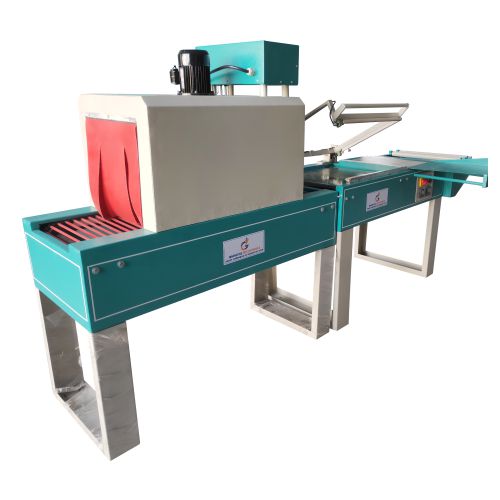
L-Sealer Machine for Tetra Pack Packaging

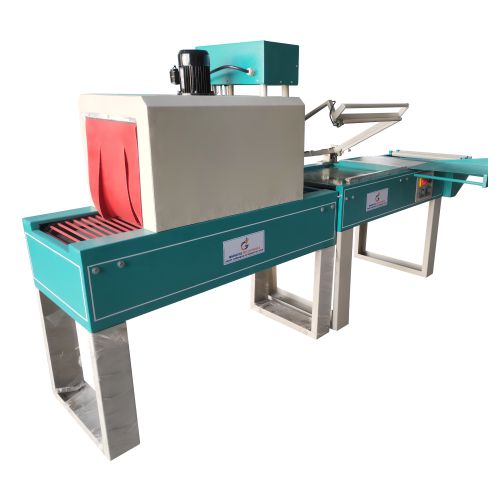
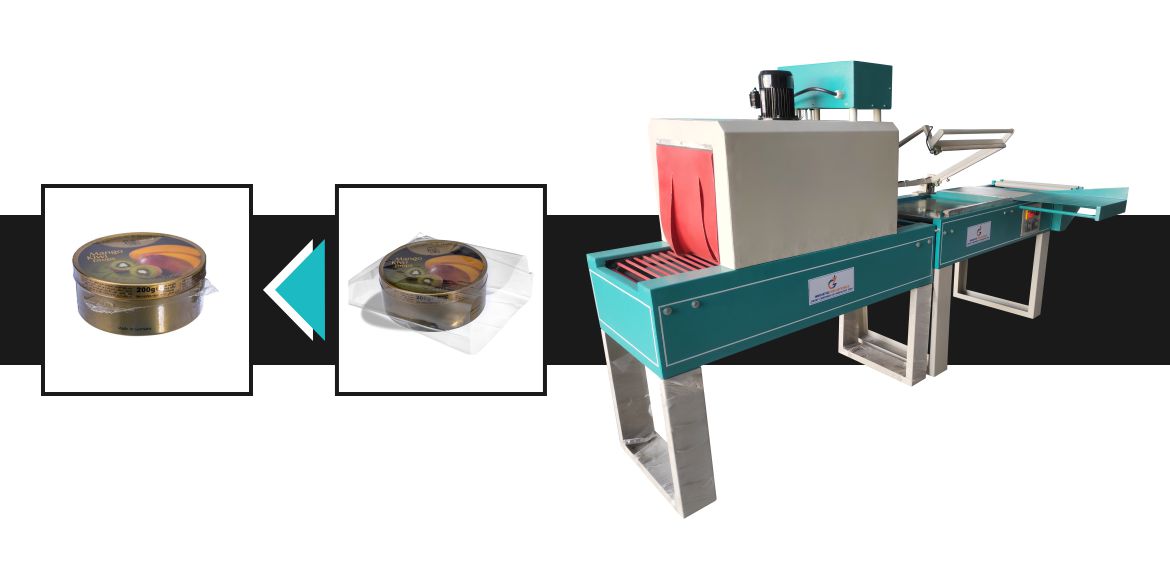
L-Sealer machine sealing Tetra Pack cartons on a production line in industrial packaging setup

L-Sealer Tetra Pack Machine

The L-Sealer Tetra Pack Machine is an industrial packaging solution designed to seal Tetra Pack cartons securely and uniformly. It uses an L-shaped sealing arm to wrap the carton edges with heat or pressure, creating airtight, tamper-proof, and professional-quality seals.

This machine ensures product integrity, hygienic packaging, and efficiency in high-volume production environments, commonly used in beverage, dairy, juice, and liquid food industries.

How the Machine Works: Step by Step

  1. Carton Loading
    Operators place filled Tetra Pack cartons on the infeed platform or conveyor.

  2. Positioning & Alignment
    Sensors or guide rails align the carton precisely to ensure accurate sealing.

  3. L-Sealing Process

    • The L-shaped sealing arm moves over the carton edges.

    • Heat or pressure is applied to seal the film along the top and side edges simultaneously.

  4. Cutting & Trimming
    The machine cuts excess film and ensures clean, uniform edges.

  5. Discharge
    The sealed carton exits via the outfeed conveyor, ready for packing, storage, or shipping.

Key Features & Operational Benefits

  • Adjustable sealing temperature & speed – Ensures compatibility with various films and carton materials.

  • PLC or microprocessor controls – Provides precise, repeatable sealing cycles.

  • Safety guards and emergency stop buttons – Protect operators during operation.

  • Compact footprint – Fits in automated production lines.

  • Durable construction – Long-term reliability for industrial environments.

Safety Standards & Compliance

These measures protect operators and ensure safe industrial operation.

How to Choose the Right Model

  • Capacity: Match the machine to production volume.

  • Carton Size & Material: Ensure machine compatibility with Tetra Pack dimensions.

  • Automation Level: Manual, semi-automatic, or fully automatic depending on throughput needs.

  • Budget & ROI: Factor in labor savings, production speed, and reduced waste.

  • Integration: Choose a model compatible with existing production lines.

Future Trends & Smart Factory Integration

  • Automation: Integration with conveyor lines, carton fillers, and labeling systems.

  • IoT & Industry 4.0: Real-time monitoring of production speed, machine health, and sealing quality.

  • Energy Efficiency: Machines with low-power heating elements reduce operational costs.

  • Flexible Production Lines: Ability to seal different carton sizes without manual adjustments.

The L-Sealer Tetra Pack Machine ensures uniform, secure, and hygienic sealing of cartons, enhancing product quality, operational efficiency, and throughput. Buyers should select professional-grade machines that meet production capacity, automation needs, and ROI expectations. Proper installation, operation, and maintenance guarantee long-term reliability and safe industrial operations.

FAQs

1. What is an L-Sealer Tetra Pack Machine?

It is an industrial packaging machine designed to seal Tetra Pack cartons securely and uniformly, ensuring airtight, hygienic, and professional-quality seals.

2. How does the L-Sealer machine work?

  • Cartons are placed on the infeed conveyor or platform.

  • The machine aligns and positions the carton using sensors or guides.

  • The L-shaped sealing arm applies heat or pressure to seal the carton edges.

  • Excess film is cut or trimmed automatically.

  • The sealed carton exits the machine, ready for packing or shipping.

3. What types of L-Sealer machines are available?

  • Manual L-Sealer: Operator wraps cartons manually; suitable for low-volume operations.

  • Semi-Automatic L-Sealer: Operator loads cartons; machine seals automatically; ideal for medium-volume production.

  • Fully Automatic L-Sealer: Conveyor-fed, minimal human intervention; designed for high-volume production lines.

  • Horizontal / Vertical L-Sealer: Horizontal for inline setups; vertical for compact factory layouts.

4. What industries use this machine?

  • Beverage and juice manufacturers

  • Dairy product packaging units

  • Liquid food and health drink industries

  • Food processing and bottling plants

  • Export-oriented packaging facilities

5. What materials and cartons can it handle?

  • Standard Tetra Pack cartons of various sizes

  • Cartons with LDPE or PE film tops

  • Laminated cartons with or without printed labels

  • Compatible with hot sealing and heat-sensitive cartons

L-Sealer Machine for Wire and Cable Bundles

L-Sealer machine sealing wire and cable bundles on industrial packaging line

L-Sealer Wire Cable Machine

The L-Sealer Wire Cable Machine is an industrial packaging solution designed to securely and uniformly seal wire and cable bundles. Using an L-shaped sealing mechanism, it ensures airtight, tamper-proof, and professional-quality packaging, protecting products during storage and transportation.

It eliminates the need for manual binding or wrapping, reduces labor costs, and maintains consistent packaging quality in high-volume production environments.

How the Machine Works

  1. Bundle Preparation
    Wire or cable bundles are gathered and aligned on the infeed platform.

  2. Positioning & Alignment
    The machine’s guides and sensors align the bundle precisely for accurate sealing.

  3. Sealing Process

    • The L-shaped sealing arm moves along the bundle edges.

    • Heat or pressure is applied to seal the packaging film or shrink wrap, securing the bundle.

  4. Cutting & Trimming
    Excess film is trimmed automatically, leaving a clean, uniform seal.

  5. Discharge
    The sealed wire or cable bundles exit via the outfeed platform, ready for storage, shipping, or further processing.

Importance in Modern Industrial Operations

  • Productivity: High-speed sealing increases output without extra labor.

  • Efficiency: Precise sealing reduces material waste and rework.

  • Safety: Minimizes operator handling of heavy or long bundles.

  • Protection: Prevents tangling, surface damage, and contamination.

  • Consistency: Maintains professional packaging quality for every bundle.

Key Technical Features & Operational Benefits

  • Adjustable sealing temperature & speed – Handles different film types and thicknesses.

  • PLC or microprocessor controls – Ensures precise and repeatable sealing cycles.

  • Safety guards and emergency stops – Protect operators during operation.

  • Durable industrial construction – Provides long-term reliability in high-volume environments.

  • Compact footprint – Fits inline in automated production facilities.

How to Choose the Right Model

  • Capacity: Match machine speed with production requirements.

  • Bundle Size & Material: Ensure compatibility with wire or cable dimensions.

  • Automation Level: Manual, semi-automatic, or fully automatic based on throughput.

  • Budget & ROI: Factor in labor savings, material efficiency, and reduced rework.

  • Integration: Check for compatibility with existing conveyors or production lines.

Best Practices for Installation, Operation & Maintenance

Installation:

  • Place on a level, vibration-free surface.

  • Ensure proper electrical grounding.

  • Align infeed and outfeed conveyors.

Operation:

  • Set correct temperature, pressure, and sealing speed.

  • Train operators on safety features and PLC/HMI controls.

  • Maintain consistent feed rate for uniform sealing.

Maintenance:

Safety Standards & Compliance

  • CE and ISO 12100 certified

  • Emergency stop buttons and safety guards

  • IEC electrical safety standards

  • Lockout-Tagout (LOTO) compatible

These measures ensure operator protection and safe industrial operation.

FAQs

1. What is an L-Sealer Wire Cable Machine?

It is an industrial packaging machine designed to securely and uniformly seal wire and cable bundles, ensuring protection, safe handling, and consistent packaging quality during storage and transportation.

2. How does the L-Sealer Wire Cable Machine work?

  • Wire or cable bundles are placed on the infeed platform or conveyor.

  • Sensors or guides align the bundles for precise sealing.

  • The L-shaped sealing arm applies heat or pressure to seal the film around the bundle.

  • Excess film is trimmed automatically, leaving a clean, professional seal.

  • Sealed bundles exit the machine for storage, shipping, or further processing.

3. What types or variants of L-Sealer machines are available?

  • Manual L-Sealer: Low-volume operations, operator-controlled.

  • Semi-Automatic L-Sealer: Operator loads bundles; machine seals automatically.

  • Fully Automatic L-Sealer: Conveyor-fed, minimal human intervention, high-volume production.

  • Shrink Film Compatible L-Sealer: For heat-shrinkable packaging around sensitive cables.

4. Which industries use this machine?

  • Wire and cable manufacturers

  • Electrical and telecom component suppliers

  • Industrial and construction cable distributors

  • Export-oriented packaging units

5. What sizes and materials can it handle?

  • Bundles of wires and cables with different diameters and lengths

  • Compatible with polyethylene, shrink films, and laminated packaging films

  • Suitable for coated, insulated, or bare conductor cables

7. How does automation affect productivity?

  • Manual wrapping is slow and labor-intensive.

  • Semi-automatic machines allow operators to load bundles while the machine seals.

  • Fully automatic machines integrate with conveyor lines, increasing throughput and reducing labor costs.

8. What safety features are included?

  • Emergency stop buttons at multiple points

  • Protective guards around moving and heated parts

  • IEC electrical safety compliance

  • Lockout-Tagout (LOTO) ready

These features protect operators and reduce workplace accidents.

L-Sealer Machine for Textile Industry Packaging

L-Sealer machine sealing textile bundles in an industrial packaging line

L-Sealer Textile Industry Machine

The L-Sealer Textile Industry Machine is an industrial packaging solution designed to securely and uniformly seal textile products, including fabrics, garments, and textile bundles. It ensures airtight, tamper-proof, and professional-quality packaging, protecting products from dust, moisture, and damage during storage and transport.

This machine eliminates manual wrapping, reduces labor costs, and maintains consistent packaging quality in high-volume textile operations.

Importance in Modern Industrial Operations

  • High Productivity: Automates sealing, increasing throughput.

  • Efficiency: Optimizes film usage and reduces rework.

  • Safety: Minimizes operator handling of heavy textile bundles.

  • Product Protection: Prevents dust, moisture, and handling damage.

  • Consistency: Maintains professional, uniform packaging quality.

Variants & Applications

VariantApplicationAdvantages
Manual L-SealerSmall-scale textile operationsLow-cost, simple, portable
Semi-Automatic L-SealerMedium-volume productionOperator loads bundles; machine seals automatically
Fully Automatic L-SealerHigh-volume textile linesConveyor-fed, minimal human intervention, high throughput
Shrink Film Compatible L-SealerBundles requiring heat shrink filmTight, professional sealing for sensitive fabrics

How to Choose the Right Model

  • Capacity: Match machine speed with production requirements.

  • Bundle Size & Material: Ensure compatibility with textile dimensions and film type.

  • Automation Level: Manual, semi-automatic, or fully automatic.

  • Budget & ROI: Consider labor savings, material efficiency, and reduced product damage.

  • Integration: Check compatibility with conveyors and existing packaging lines.

Comparison with Manual or Alternative Methods

FeatureL-Sealer MachineManual Wrapping
Seal QualityUniform and professionalInconsistent, prone to damage
SpeedHigh-volume, automatedSlow, labor-intensive
LaborMinimalHigh
Material EfficiencyOptimizedWasteful
SafetyFull compliance and guardsHigher risk of injury

Best Practices for Installation, Operation & Maintenance

Installation:

  • Place on a level, vibration-free surface

  • Ensure proper electrical grounding

  • Align infeed and outfeed conveyors

Operation:

Maintenance:

  • Daily: Clean sealing bars, sensors, and conveyor surfaces

  • Weekly: Inspect heating elements, knives, and moving parts

  • Monthly / Long-term: Lubricate motors, calibrate sensors, and perform preventive maintenance

Safety Standards & Compliance

  • CE and ISO 12100 certified

  • Emergency stop buttons and protective guards

  • IEC electrical safety standards

  • Lockout-Tagout (LOTO) ready

These measures ensure operator safety and reduce operational risks in textile packaging operations.

FAQs

1. What is an L-Sealer Textile Industry Machine?

It is an industrial packaging machine designed to securely and uniformly seal textile products, such as fabrics, garments, and textile bundles, protecting them from dust, moisture, and damage during storage and transportation.

2. How does the L-Sealer Textile Industry Machine work?

  • Textile bundles are placed on the infeed platform or conveyor.

  • Guides and sensors align the bundles for precise sealing.

  • The L-shaped sealing arm applies heat or pressure to seal the packaging film around the textiles.

  • Excess film is automatically trimmed, leaving a clean, professional seal.

  • Sealed bundles exit the machine ready for storage, shipping, or retail distribution.

3. What types or variants are available?

  • Manual L-Sealer: Low-volume operations, operator-controlled.

  • Semi-Automatic L-Sealer: Operator loads bundles; machine seals automatically.

  • Fully Automatic L-Sealer: Conveyor-fed, high-volume production with minimal human intervention.

  • Shrink Film Compatible L-Sealer: For heat-shrinkable packaging around sensitive textile products.

4. Which industries use this machine?

  • Textile and garment manufacturers

  • Fabric distribution centers

  • Export-oriented textile packaging units

  • Industrial textile suppliers

  • Retail and warehouse textile operations

5. What bundle sizes and materials can it handle?

  • Textile bundles with various lengths, widths, and thicknesses

  • Compatible with polyethylene (PE), shrink films, and laminated films

  • Works for folded fabrics, garments, and rolls of textile materials