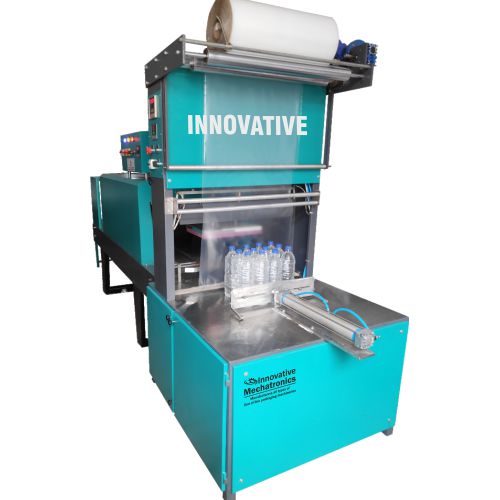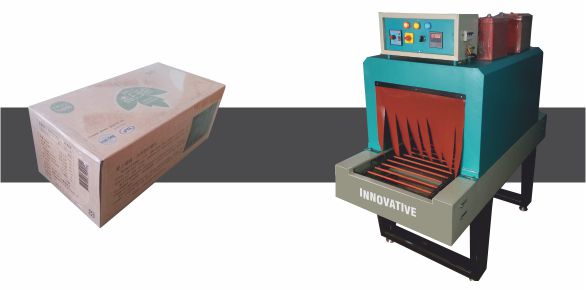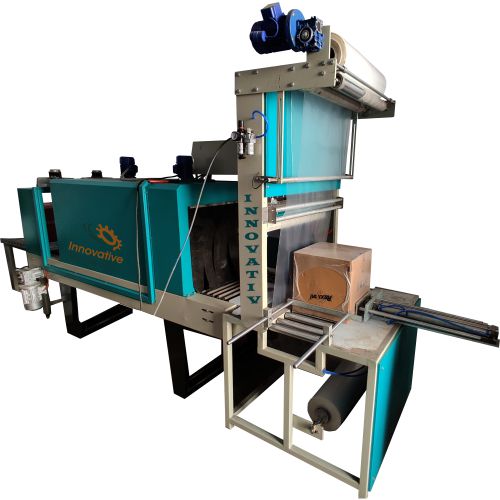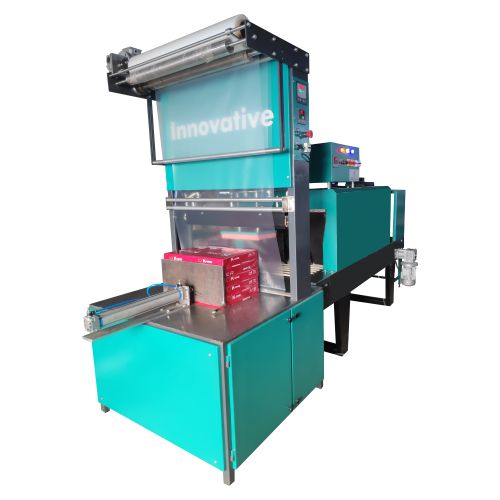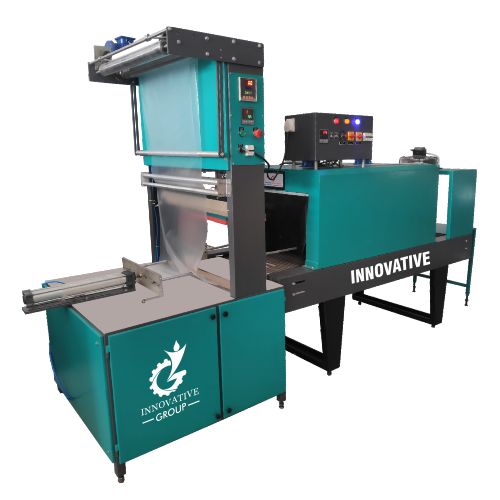
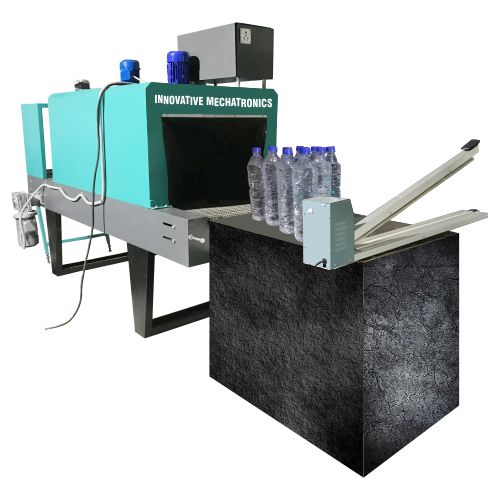
L Sealer Type Machine
1. What Is an L Sealer Type Machine?
An L Sealer Type Machine wraps products in shrink film and seals them in an “L” shape before shrinking the film tightly around the product. Manufacturers use this machine to achieve clean, professional, and tamper-proof packaging at high speed with minimal manual effort.
Packaging units rely on L sealers to increase output consistency, reduce labor cost, and improve product presentation across retail and industrial markets.
How an L Sealer Type Machine Works (Step-by-Step)
Step 1: Load the Product
The operator places the product on the infeed conveyor or sealing table and aligns it with the center-folded shrink film.
Step 2: Position the Film
The machine feeds the shrink film smoothly above and below the product, ensuring proper overlap for sealing.
Step 3: Activate the L-Sealing Arm
The L-shaped sealing arm closes and creates two seals simultaneously—one side seal and one end seal—using controlled heat and pressure.
Step 4: Cut Excess Film
The sealing blade cuts excess film precisely and prepares the package for shrinking without loose edges.
Step 5: Transfer to the Shrink Tunnel
The conveyor moves the sealed pack into the shrink tunnel, where hot air shrinks the film uniformly around the product.
Step 6: Cool and Discharge the Pack
The pack cools naturally or through cooling fans, delivering a tight, transparent, and durable finish.
Why Industries Use L Sealer Machines
L sealer machines speed up packaging operations, standardize pack quality, and lower operating costs.
Key Advantages
Delivers uniform seals on every pack
Reduces dependence on manual labor
Increases daily packaging output
Minimizes film wastage
Produces retail-ready packaging
Compared to Manual Packaging
Manual wrapping slows production, creates inconsistent seals, and increases fatigue. L sealers automate sealing and cutting, ensuring repeatable quality with higher efficiency.
Types of L Sealer Type Machines and Their Uses
Manual L Sealer
Operators close the sealing arm manually. Small businesses use this model for low-volume packaging.
Semi-Automatic L Sealer
The machine performs sealing automatically while operators feed products manually. This type suits medium production lines.
Fully Automatic L Sealer
Sensors detect products, control sealing, and transfer packs automatically. Large manufacturers use this model for high-speed continuous production.
Pneumatic L Sealer
Air pressure drives the sealing arms, ensuring consistent sealing force. Industries choose this model for heavier or rigid products.
Key Technical Features and Operational Benefits
| Feature | Benefit |
|---|---|
| Teflon-coated sealing blade | Prevents film sticking and ensures clean seals |
| Adjustable sealing temperature | Handles multiple shrink film types |
| Conveyorized system | Maintains smooth product flow |
| Digital temperature control | Improves seal consistency |
| Safety interlocks | Protects operators during operation |
Standard Technical Specifications
Sealing Area: 400×300 mm to 800×600 mm
Packaging Speed: 8–25 packs per minute
Film Types: POF, PVC, PE
Power Supply: 220V / 415V
Air Requirement (Pneumatic): 5–7 bar
Maximum Product Height: Up to 300 mm
Machine Body: Powder-coated steel or stainless steel
Industries and Applications
Industries
FMCG and retail
Food and bakery
Pharmaceuticals
Cosmetics
Printing and publishing
Electronics
FAQs
Q1. Can one L Sealer machine pack multiple product sizes?
Yes. Operators can adjust sealing frames and conveyor guides to handle multiple sizes.
Q2. Which shrink film works best with L sealers?
Most industries prefer POF film due to its clarity, strength, and food safety compliance.
Q3. Do L Sealer machines require skilled operators?
No. Basic training enables operators to run the machine efficiently.
Q4. How often should operators replace sealing blades?
Regular users replace blades every 6–12 months, depending on workload.
Q5. Can this machine integrate into an existing line?
Yes. Fully automatic models integrate easily with conveyors and shrink tunnels.