Water Bottle Shrink Wrapper – Complete Industrial Guide
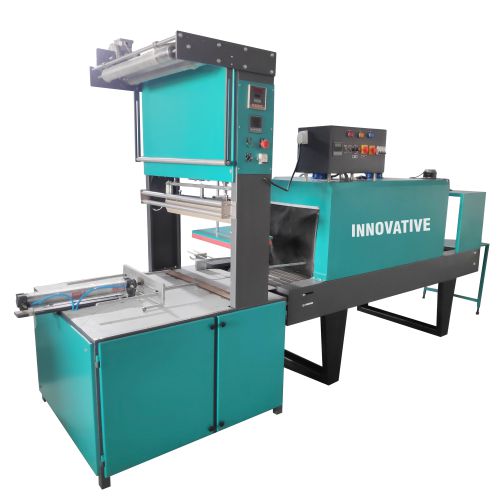
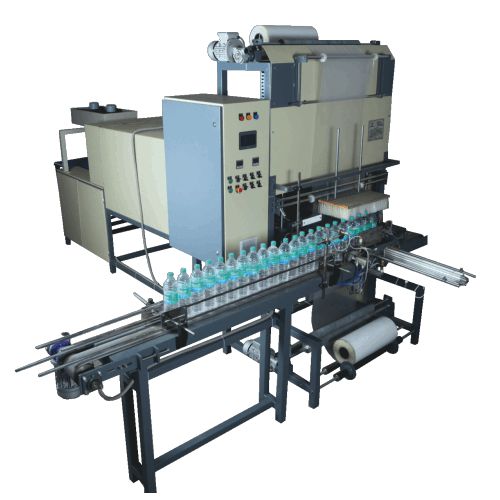
The Water Bottle Shrink Wrapper – Complete Industrial Guide from Innovative WrapTech Pvt. Ltd. provides a detailed, step-by-step explanation of water bottle shrink wrapping machines for industrial operations. This guide explains what the machine is, how it works technically, and the operational steps involved, from bottle loading to sealing and shrinking. It highlights the importance of automated shrink wrapping in modern production lines, showing how it improves efficiency, ensures consistent packaging quality, and reduces material waste.
The guide also covers different machine types—semi-automatic, fully automatic, and rotary systems—along with key technical features, industry-standard specifications, and real-world applications across bottled water, beverage, and food industries. Additionally, it offers guidance on choosing the right machine based on capacity, bottle size, automation level, and budget. Practical insights on installation, operation, maintenance, safety standards, and troubleshooting ensure operators can maximize efficiency while maintaining compliance and safety.
This comprehensive guide is tailored for industrial readers, plant managers, and packaging professionals looking for efficient, reliable, and modern water bottle packaging solutions.
How It Works – Step by Step
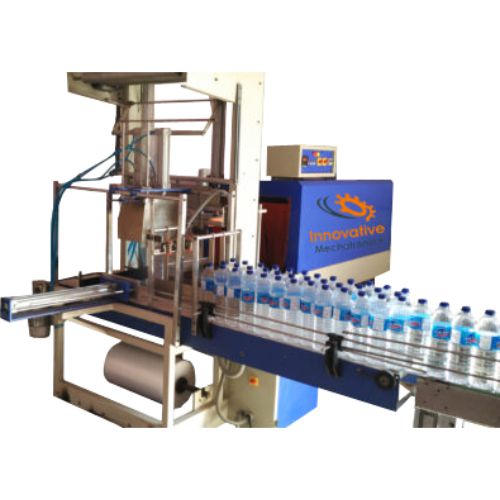
Bottle Loading: Operators place bottles on the infeed conveyor or the machine’s accumulation area. Some machines have automatic feeders to reduce manual handling.
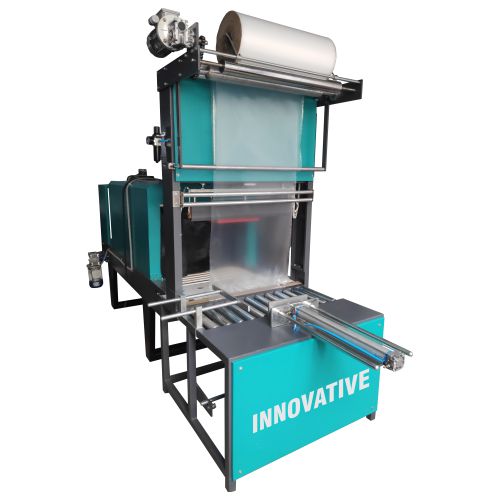
Film Feeding: The machine pulls shrink film from a roll and wraps it around the bottles.
Sealing: A hot sealing bar or tunnel fuses the film edges to secure the pack.
Shrinking: The wrapped bottles pass through a heat shrink tunnel, where controlled heat causes the film to shrink tightly around the bottles.
Cooling & Discharge: The wrapped pack exits the tunnel and cools slightly before moving to the packing or palletizing area.
This process ensures uniform, professional-looking packaging with minimal film wastage.
Importance in Modern Industrial Operations
Using a Water Bottle Shrink Wrapper brings several industrial advantages:
Increased productivity: Automates repetitive tasks, saving labor.
Consistent packaging quality: Each pack is uniform, attractive, and secure.
Reduced material waste: Precise film usage lowers packaging costs.
Enhanced product protection: Protects bottles from dust, moisture, and tampering.
Scalability: Ideal for small, medium, and large production lines.
Compared to manual wrapping, these machines eliminate human errors, reduce downtime, and improve line efficiency.
Types and Variants
Innovative WrapTech Pvt. Ltd. offers multiple variants based on production needs:
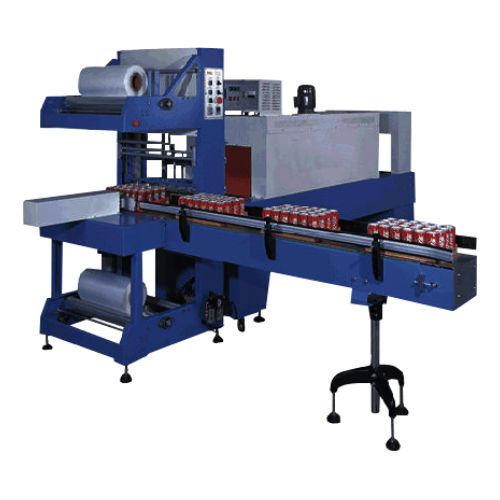
Semi-Automatic Shrink Wrappers:
Operator places bottles; machine handles sealing and shrinking.
Ideal for small to medium-scale production.
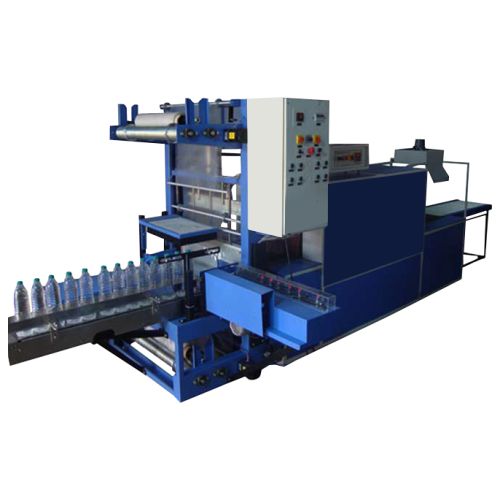
Fully Automatic Shrink Wrappers:
Automatic bottle feeding, wrapping, sealing, and discharge.
Suited for high-volume industrial lines.
Inline or Rotary Systems:
Inline: Bottles move straight through the tunnel.
Rotary: Bottles rotate for uniform film application, ideal for round bottles or irregular shapes.
How to Choose the Right Machine
Consider the following factors:
Production Capacity: Choose a model that matches your daily output.
Bottle Material & Size: Ensure the machine can handle PET, glass, or other bottle types.
Level of Automation: Semi-automatic vs fully automatic depending on labor and efficiency goals.
Budget: Compare operational cost vs long-term efficiency gains.
Space Availability: Ensure the footprint fits your production floor.
FAQs
Q1: Can this machine wrap different bottle sizes?
A: Yes. Adjustable guides and shrink tunnel settings allow multiple bottle sizes from 200 ml to 2 L.
Q2: What shrink films are compatible?
A: Polyolefin, PVC, and PET films work efficiently with this machine.
Q3: How fast can it pack bottles?
A: Depending on the model, output ranges from 500 to 3000 bottles per hour.
Q4: Is training required?
A: Minimal training is needed; PLC controls and user-friendly design simplify operation.
Q5: How do I maintain the machine?
A: Regular cleaning, lubrication, and heater inspection ensure long life and consistent performance.