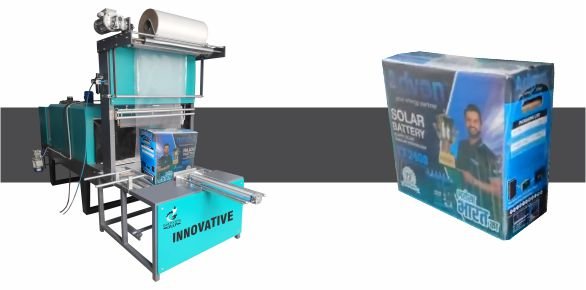
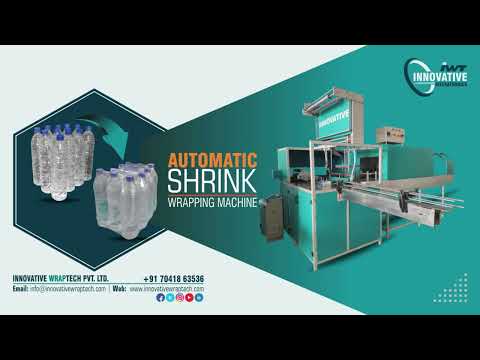
Product Extra DetailA Shrink Wrap Machine is an industrial device that automatically wraps products in heat-sensitive shrink film, creating tight, secure, and tamper-resistant packaging. By using controlled heat, the film shrinks evenly around products, providing protection, stability, and professional presentation.
Shrink wrap machines replace manual packing, which is slow, inconsistent, and labor-intensive. They are widely used in beverage bottling, FMCG, pharmaceuticals, electronics, and e-commerce industries.
How Does a Shrink Wrap Machine Work?
Product Infeed
Products enter via an automatic conveyor or hopper. Sensors and guides position each item accurately for wrapping.
Film Unwinding & Tensioning
Heat shrink film (POF/LDPE) is unwound from motorized rollers. Servo-driven tension systems maintain uniform feed to avoid wrinkles or breakage.
Wrapping & Sealing
The product is enveloped in film. Heat-sealing units cut and seal the edges, creating strong, uniform seals.
Heat Shrinking
The sealed product passes through a shrink tunnel. Controlled hot air evenly shrinks the film, forming a tight, professional package.
Cooling & Discharge
Cooling fans stabilize the film. Finished packs exit via the outfeed conveyor, ready for labeling, boxing, or palletizing.
Why Shrink Wrap Machines Are Critical in Industrial Operations
High-speed packaging: Ideal for large production lines.
Consistent quality: Eliminates human error and ensures uniform sealing.
Product protection: Shields against dust, moisture, and tampering.
Cost efficiency: Reduces labor and material wastage.
Regulatory compliance: Meets industrial safety and packaging standards.
Compared to manual wrapping, these machines save time, reduce errors, and increase throughput.
Key Technical Features and Operational Benefits
Servo-driven conveyors: Precise product handling at high speeds.
PLC-based automation: Enables consistent, error-free operation.
Automatic size adjustment: Reduces downtime during product changeovers.
High-speed shrink tunnels: Uniform heat distribution ensures quality wrapping.
Vision inspection (optional): Detects misaligned packs or defective sealing.
Operational benefits include higher throughput, reduced rejects, consistent packaging, and improved operator safety.
How to Choose the Right Shrink Wrap Machine
Consider these factors:
Capacity requirements (packs per minute)
Product type & dimensions (bottles, cartons, trays)
Level of automation (semi vs. fully automatic)
Material compatibility (POF, LDPE)
Budget and ROI expectations
Available floor space and utilities
Common Operational Problems and Solutions
| Problem | How Machine Addresses It |
|---|
| Wrinkled film | Servo-driven tension control |
| Uneven sealing | Adjustable heat & sealing pressure |
| Film tear | High-quality POF/LDPE and auto alignment |
| Product misalignment | Sensor-guided conveyors and guides |
| Downtime | PLC diagnostics and modular components for fast service |
Installation, Operation, and Maintenance Best Practices
Installation
Level, vibration-free floor
Adequate electrical grounding and supply
Proper ventilation around shrink tunnel
Space for maintenance and inspection
Daily Operation
Clean debris and dust
Check belts, sensors, and emergency stops
Monitor temperature settings
Weekly Maintenance
Long-Term Maintenance
Replace wear parts based on usage hours
Electrical and safety audits
Firmware and control system upgrades
Future Trends and Automation
Integration with MES, ERP, and Industry 4.0 systems
Predictive maintenance with sensors and IoT
AI-powered inspection for quality control
Energy-efficient servo systems
Fully unmanned packaging lines for smart factories
Frequently Asked Questions (FAQs)
1. What determines the price of a shrink wrap machine?
Price depends on machine type (semi-automatic or fully automatic), production capacity, product size, type of shrink film, and optional features such as PLC control, conveyor integration, or heat tunnel length.
2. What is the typical price range?
Semi-automatic machines typically range from ₹40,000 to ₹2,00,000. Fully automatic machines range from ₹2,00,000 to ₹8,00,000 or more, depending on specifications and custom requirements.
3. Does machine customization affect cost?
Yes. Custom options such as handling irregular shapes, larger products, or specialized shrink films can increase the machine cost.
4. Are there additional operational costs?
Yes. Additional costs include electricity consumption, shrink film usage, maintenance, and occasional replacement of sealing blades or heaters.
5. How can I get an exact price quote?
Contact the manufacturer or supplier with your product details, production capacity, and preferred shrink film. They will recommend suitable models and provide a tailored price.
6. What is the price range of an automatic or industrial shrink wrap machine?
The price of an industrial shrink wrap machine typically ranges from ₹3,00,000 to ₹7,00,000 (and can go higher based on advanced customizations).