Products

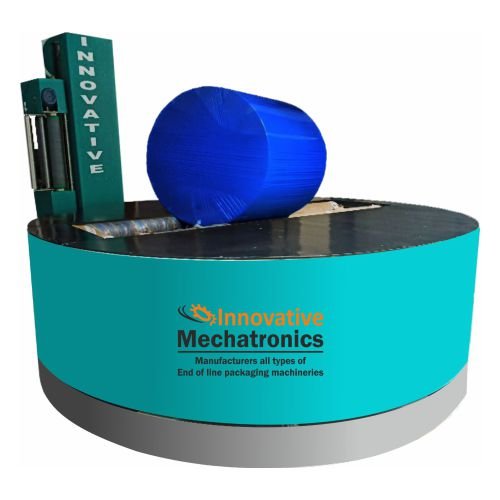
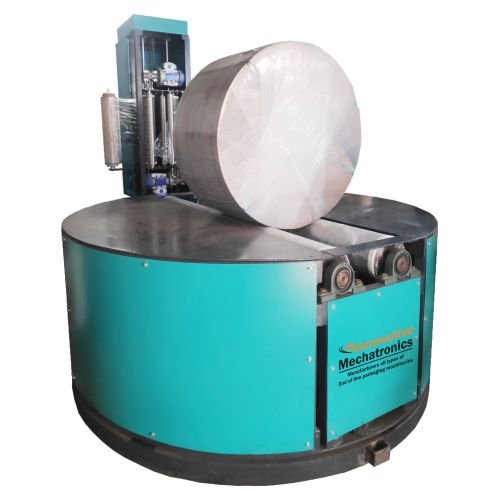
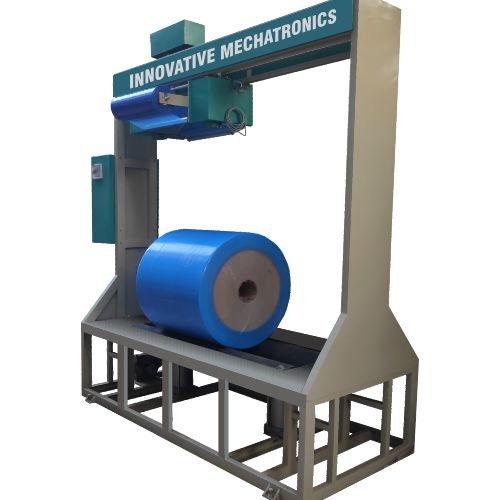
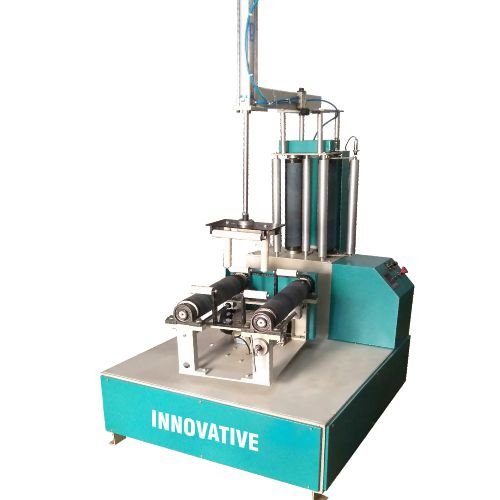
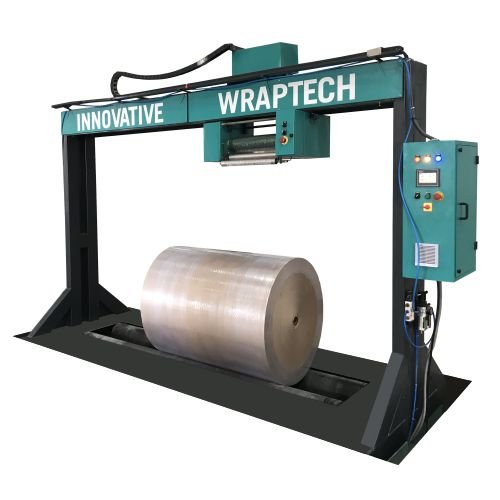
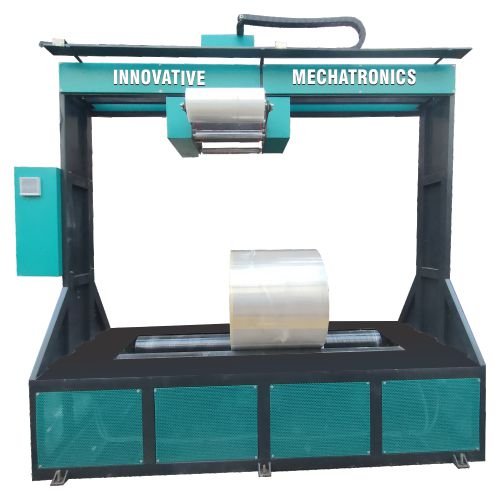
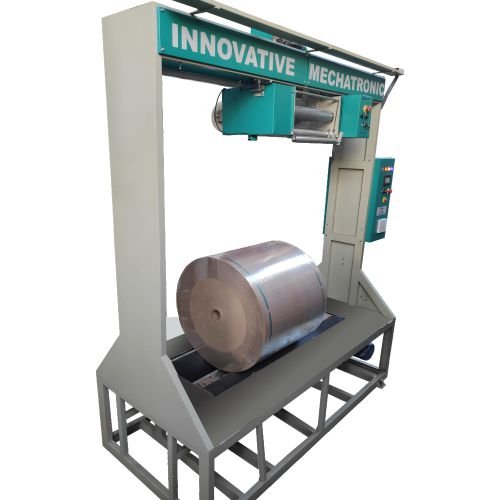
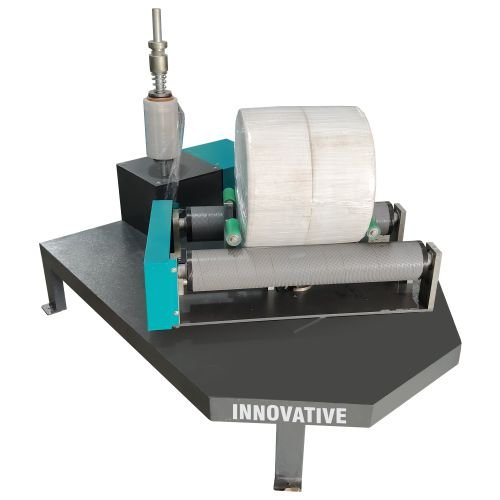
Radial Type Paper Roll Packing Machine

Radial type paper roll packing machine in industrial operation

Radial Paper Roll Packing is an advanced industrial packaging method designed to wrap paper rolls in a radial or circumferential pattern using stretch film or protective wrapping material. The process applies uniform film tension around the roll diameter, ensuring complete surface coverage and consistent protection.

This system protects paper rolls from moisture, dust, tearing, and deformation during storage, handling, and transportation. Paper mills, printing houses, converting units, and export-oriented packaging operations widely use radial packing for its reliability and packaging consistency.

How Does Radial Paper Roll Packing Work?

Step 1: Roll Positioning

The operator places the paper roll horizontally onto motorized support rollers or a cradle system. The machine stabilizes the roll to prevent axial movement.

Step 2: Film Anchoring

The system attaches the stretch film to the roll edge or core using a clamp or manual tie, depending on the automation level.

Step 3: Controlled Roll Rotation

The drive rollers rotate the paper roll at a controlled speed. This rotation creates a smooth radial wrapping path around the roll circumference.

Step 4: Radial Film Application

The film carriage moves along the roll length while maintaining constant radial tension. This action ensures even overlap and tight wrapping without damaging the paper edges.

Step 5: Edge & Surface Protection

Optional end-wrapping modules cover roll faces, protecting vulnerable edges from impact and moisture.

Step 6: Film Cutting & Sealing

The machine cuts and secures the film automatically or semi-automatically after completing the wrapping cycle.

Step 7: Roll Discharge

The wrapped roll exits the system via conveyor or manual unloading, ready for storage or dispatch.

What Types of Radial Paper Roll Packing Systems Are Available?

1. Semi-Automatic Radial Packing System

  • Operator loads and unloads rolls

  • Machine controls rotation and wrapping

  • Cost-effective for medium production volumes

Used when: Flexibility and controlled investment matter.

2. Fully Automatic Radial Packing System

  • Integrated conveyors and sensors

  • Automatic roll handling and discharge

  • High-speed continuous operation

Used when: Paper mills run continuous, high-output production lines.

3. Heavy-Duty Radial Roll Wrapper

  • Designed for jumbo and high-weight rolls

  • Reinforced frame and higher torque drives

Used when: Roll weight and diameter exceed standard machine limits.

4. Customized Radial Packing Solutions

  • Tailored roll dimensions and wrapping patterns

  • Integrated weighing, labeling, or end-wrapping

Used when: Standard systems cannot meet specialized production needs.

How Does Radial Packing Improve Operational Efficiency?

  • Delivers faster wrapping cycles

  • Reduces packaging material costs

  • Ensures consistent roll protection

  • Lowers dependency on skilled labor

  • Improves warehouse stacking stability

Which Industries Commonly Use Radial Paper Roll Packing?

  • Paper mills and converting plants

  • Printing and publishing facilities

  • Tissue and kraft paper manufacturers

  • Packaging material producers

  • Export-oriented paper logistics centers

Frequently Asked Questions

What roll sizes can radial packing systems handle?

Machines support a wide range of diameters, widths, and weights, including jumbo rolls.

Does radial wrapping damage paper edges?

No. Adjustable tension and smooth rotation protect roll edges and surfaces.

Is radial packing suitable for high-speed production lines?

Yes. Fully automatic systems integrate seamlessly with high-output paper mills.

How much maintenance does the system require?

Routine inspection, lubrication, and tension calibration ensure long-term reliability.

Conclusion

Radial Paper Roll Packing delivers consistent protection, improved efficiency, and reduced operational risk. It ensures paper rolls reach customers in perfect condition while supporting high-volume industrial operations. For manufacturers focused on quality, scalability, and cost control, this system is a strategic investment.

Fabric Roll Packing Machine

Fabric roll packing machine wrapping textile rolls

A Fabric Roll Packing Machine is an industrial packaging system designed to wrap fabric rolls securely using stretch film or protective materials. It protects textiles from dust, moisture, contamination, and handling damage during storage and transportation.

This machine ensures uniform wrapping and controlled tension, which manual methods cannot achieve consistently. Textile manufacturers, fabric processors, garment exporters, and warehouses rely on this system to maintain fabric quality and presentation.

Why Is This Machine Important in Modern Industrial Operations?

Modern textile operations demand speed, consistency, and protection. This machine plays a critical role by:

  • Increasing Packaging Efficiency: Wraps fabric rolls faster than manual packing.

  • Reducing Fabric Damage: Protects delicate textiles from tearing and contamination.

  • Lowering Labor Costs: Minimizes manual handling and operator fatigue.

  • Improving Packaging Consistency: Delivers uniform and professional roll wrapping.

  • Supporting High-Volume Production: Matches the pace of modern textile production lines.

In competitive markets, consistent packaging directly improves logistics performance and customer satisfaction.

How to Choose the Right Fabric Roll Packing Machine

Selecting the correct machine ensures long-term productivity and cost efficiency.

1. Capacity

Choose a machine that supports your fabric roll diameter, width, and weight. Heavy-duty models handle jumbo rolls used in industrial textile production.

2. Material Compatibility

Ensure the machine suits different fabric types, including cotton, polyester, denim, knitted fabrics, and technical textiles.

3. Automation Level

  • Semi-Automatic Machines: Ideal for medium-volume operations.

  • Fully Automatic Machines: Best for continuous, high-speed textile lines.

4. Budget

Balance initial investment with long-term savings from reduced labor, lower waste, and improved efficiency.

5. Customization

Look for adjustable tension control, end-face wrapping, and conveyor integration for smoother workflows.

Why Manufacturers Prefer Professional-Grade Fabric Roll Packing Machines

Manufacturers choose professional machines because they deliver:

  • Heavy-duty construction for continuous operation

  • Consistent wrapping quality across all fabric types

  • Low maintenance and minimal downtime

  • Scalability for growing production demands

  • Higher return on investment over time

Professional-grade machines protect fabric quality while improving operational reliability.

Frequently Asked Questions

How does a Fabric Roll Packing Machine work?

The operator places the fabric roll on the machine. The system rotates the roll while stretch film wraps it evenly under controlled tension.

What fabric types can this machine handle?

The machine supports cotton, polyester, denim, knitted fabrics, technical textiles, and blended materials.

Is it suitable for export packaging?

Yes. The machine provides uniform, moisture-resistant packaging ideal for export and long-distance transport.

Does the machine damage delicate fabrics?

No. Adjustable tension settings protect delicate textiles from compression or distortion.

Is operator training required?

Minimal training is required due to user-friendly controls and safe machine design.

Conclusion

The Fabric Roll Packing Machine from Innovative WrapTech Pvt. Ltd. delivers reliable, efficient, and consistent packaging for textile industries. It protects fabric quality, improves productivity, and reduces operational costs, making it an essential investment for modern industrial operations.

Laminated Bottom Paper Roll Stretch Wrapping Machine

Laminated bottom paper roll stretch wrapping machine in operation

A Laminated Paper Roll Wrapping Machine is an industrial system designed to wrap laminated bottom paper rolls with stretch film or protective materials. It ensures complete coverage of the roll, protecting it from moisture, dust, mechanical damage, and contamination during storage, handling, and transportation.

This machine delivers uniform tension, consistent wrapping, and professional packaging, which manual methods cannot achieve efficiently. Paper manufacturers, converters, and export-oriented packaging operations rely on it for superior protection and reliability.

Why Is This Machine Important in Modern Industrial Operations?

Modern industries require speed, consistency, and protection. The Laminated Paper Roll Wrapping Machine addresses these demands by:

  • Enhancing Efficiency: Wraps laminated paper rolls faster than manual methods.

  • Reducing Product Damage: Protects rolls from moisture, dust, and physical damage.

  • Lowering Labor Costs: Minimizes manual handling and operator fatigue.

  • Ensuring Consistency: Delivers uniform wrapping for every roll.

  • Supporting High-Volume Production: Handles continuous industrial operations with precision.

Using this machine improves logistics efficiency, reduces rejections, and ensures professional-quality packaging for domestic and export markets.

How to Choose the Right Laminated Paper Roll Wrapping Machine

1. Capacity

Select a machine that supports your typical roll diameter, width, and weight. Heavy-duty models handle jumbo laminated rolls efficiently.

2. Material Compatibility

Ensure compatibility with laminated paper, coated paper, or specialty paper types.

3. Automation Level

  • Semi-Automatic Machines: Suitable for moderate production volumes.

  • Fully Automatic Machines: Ideal for continuous high-speed operations.

4. Budget

Balance initial investment with long-term efficiency, lower labor costs, and reduced material wastage.

5. Customization Options

Look for adjustable film tension, end-face wrapping, and integration with conveyors for optimized workflow.

Key Technical Features & Operational Benefits

Technical Features

  • Heavy-duty steel frame

  • Adjustable stretch film tension

  • Smooth rotation with roller or conveyor handling

  • Semi-automatic and fully automatic models

  • Compact and space-efficient design

Operational Benefits

  • Faster wrapping cycles

  • Reduced film consumption

  • Improved product protection

  • Lower labor dependency

  • Enhanced storage and transportation efficiency

Frequently Asked Questions

Q1: How does the Laminated Paper Roll Wrapping Machine work?

A: Operators place the laminated roll on the machine. The system rotates the roll while the film wraps it evenly, ensuring complete protection.

Q2: What types of laminated paper rolls can it handle?

It supports laminated paper, coated paper, and specialty rolls of various sizes and weights.

Q3: Is it suitable for high-volume industrial operations?

Yes. Fully automatic models handle continuous high-speed packaging.

Q4: How is the machine maintained?

Routine cleaning, lubrication, tension calibration, and inspection of rollers ensure long-term performance.

Fabric Roll Stretch Wrapping Machine

Fabric roll stretch wrapping machine securely wrapping textile rolls with stretch film

A Fabric Roll Stretch Wrapper is an industrial packaging machine designed to securely wrap fabric and textile rolls using stretch film. The machine applies controlled tension to ensure tight, uniform, and damage-free wrapping, protecting rolls from dust, moisture, handling damage, and contamination during storage and transportation.

Innovative WrapTech Pvt. Ltd. engineers this machine specifically for textile mills, garment manufacturers, fabric processors, warehouses, and export packaging operations, where roll integrity and presentation directly impact product value.

Why This Machine Is Important in Modern Industrial Operations

Modern textile operations demand speed, consistency, and protection. Manual wrapping cannot meet these expectations.

The Fabric Roll Stretch Wrapper:

  • Ensures consistent wrap quality across all fabric types

  • Reduces material waste through precise film control

  • Improves packaging speed and throughput

  • Protects high-value fabric rolls during long-distance logistics

  • Enhances professional appearance for export shipments

In competitive textile markets, reliable roll packaging reduces returns, prevents quality loss, and improves brand credibility.

How to Choose the Right Fabric Roll Stretch Wrapper

1. Capacity & Throughput

Select a machine based on:

  • Daily roll output

  • Roll diameter and weight

  • Continuous vs batch operation

High-volume mills benefit from fully automatic systems, while smaller units may prefer semi-automatic models.

2. Fabric & Material Type

Different fabrics require different handling:

  • Cotton, polyester, denim, non-woven

  • Sensitive or coated textiles

  • Laminated or finished rolls

Choose a wrapper with adjustable tension control to prevent stretching, edge damage, or deformation.

3. Automation Level

Innovative WrapTech Pvt. Ltd. offers:

  • Manual – Low investment, small production

  • Semi-Automatic – Balanced productivity

  • Fully Automatic – Maximum speed, minimal labor

Automation reduces labor dependency and ensures repeatable, high-quality packaging.

4. Budget & Operating Cost

Look beyond initial price:

  • Film consumption efficiency

  • Maintenance requirements

  • Energy usage

  • Machine lifespan

Professional-grade machines deliver lower cost per roll over time, making them a smarter long-term investment.

Why Manufacturers Prefer Professional-Grade Machines

Manufacturers choose professional Fabric Roll Stretch Wrappers because they:

  • Maintain consistent packaging quality

  • Handle heavy and oversized rolls

  • Operate reliably in 24/7 environments

  • Reduce film waste and labor costs

  • Support export-quality packaging standards

Innovative WrapTech Pvt. Ltd. machines deliver precision engineering, durability, and long-term performance trusted by textile leaders.

(FAQ)

Q1. What types of fabric rolls can this machine wrap?

The Fabric Roll Stretch Wrapper handles cotton, polyester, denim, non-woven, laminated, and specialty textile rolls.

Q2. Does stretch wrapping damage delicate fabrics?

No. Adjustable tension control ensures safe wrapping without fabric distortion or compression damage.

Q3. Is this machine suitable for export packaging?

Yes. The machine provides dust-proof, moisture-resistant, and tamper-secure wrapping, ideal for export shipments.

Q4. How much labor does the machine require?

Fully automatic models require minimal operator involvement, significantly reducing labor costs.

Q5. Why choose Innovative WrapTech Pvt. Ltd.?

Innovative WrapTech Pvt. Ltd. offers industrial-grade engineering, customization options, reliable after-sales support, and proven performance across textile industries.

Jambo Roll Stretch Wrapping Machine

Jumbo Roll Stretch Wrapping Machine wrapping a heavy industrial reel by Innovative Wraptech

A Jumbo Roll Stretch Wrapper is a heavy-duty industrial machine engineered to securely wrap large-diameter and high-weight rolls using stretch film. It delivers uniform tension, tight film application, and full surface coverage, protecting jumbo rolls from dust, moisture, impact damage, and handling stress.

Innovative WrapTech Pvt. Ltd. designs this Jumbo Roll Stretch Wrapping Machine for paper mills, textile manufacturers, flexible packaging plants, non-woven producers, and export warehouses where large rolls demand a reliable, professional Roll Wrapping Machine.

How does a Jumbo Roll Stretch Wrapping Machine work?

Step-by-Step Operating Process

1.Load the Jumbo Roll:Ensure center alignment before starting.

The heavy roll is placed onto the motorized turntable or drive rollers using an overhead crane, forklift, or ramp system.

2.Attach the Stretch Film:Manual or automatic clamping depending on model.

The operator threads the film from the carriage rollers and attaches the leading edge to the roll surface or pneumatic clamp.

3.Set Wrapping Parameters:Configured via PLC touch screen.

The operator selects the required wrapping pattern, turntable rotation speed, film tension level, and top/bottom wrap count.

4.Initiate the Automatic Cycle:

The machine rotates the roll on its axis while the powered pre-stretch film carriage moves vertically to cover the full width evenly.

5.Cut and Seal the Film: Automatic or pneumatic wiping system.

Once the cycle completes, an integrated hot-wire or pneumatic cutter cuts the film, and a wiper arm secures the trailing end to the wrapped roll.

6.Unload the Finished Roll:

The wrapped jumbo roll is safely discharged from the rollers using an ejector or lifted out via crane or forklift for transit or storage.

How to Choose the Right Jumbo Roll Stretch Wrapper

1. Capacity & Roll Size

Select a machine based on:

  • Maximum roll diameter and width

  • Roll weight handling capacity

  • Daily wrapping volume

High-output plants benefit from fully automatic jumbo roll wrappers built for continuous operation.

2. Material Type

Different industries require different wrapping precision:

  • Paper and kraft rolls

  • Textile and non-woven rolls

  • Film, foil, and laminated rolls

Choose models with adjustable film tension and programmable wrapping cycles to match material sensitivity.

3. Automation Level

Innovative WrapTech Pvt. Ltd. offers:

  • Semi-Automatic – Controlled operation, moderate investment

  • Fully Automatic – Maximum speed, minimal operator intervention

Automation improves consistency, safety, and productivity.

4. Budget & Long-Term Value

Evaluate total ownership cost:

  • Stretch film optimization

  • Energy efficiency

  • Maintenance and service life

Professional-grade machines deliver lower per-roll cost and higher uptime, making them more economical over time.

Safety Standards, Compliance & Operator Protection

Innovative WrapTech Pvt. Ltd. builds machines that prioritize operator safety and industrial compliance through:

  • Emergency stop systems

  • Guarded rotating components

  • Stable roll cradles and supports

  • Electrical protection and overload control

  • Ergonomic control panels

These features ensure safe operation, regulatory compliance, and reduced workplace risk.

(FAQ)

Q1. What roll sizes can the Jumbo Roll Stretch Wrapper handle?

The machine supports large-diameter and high-weight rolls, customizable to specific industry needs.

Q2. Is stretch wrapping safe for paper and textile jumbo rolls?

Yes. Controlled tension prevents compression, edge damage, and deformation.

Q3. Can this machine be integrated into existing production lines?

Yes. Innovative WrapTech Pvt. Ltd. offers custom integration options for seamless workflow.

Q4. How much manpower does the machine require?

Fully automatic models require minimal operator involvement, improving productivity.

Q5. Why choose Innovative WrapTech Pvt. Ltd.?

The company offers industrial-grade engineering, customization, reliable after-sales support, and proven performance across heavy-duty applications.

Conclusion

The Jumbo Roll Stretch Wrapper by Innovative WrapTech Pvt. Ltd. is a critical investment for industries handling large and heavy rolls. It enhances packaging strength, operational efficiency, safety, and long-term cost control, making it the preferred choice for modern industrial operations.

Paper Roll Stretch Wrapping Machine

Stretch Paper Roll Wrapping Machine wrapping industrial rolls with protective stretch film

A Paper Roll Stretch Wrapper is an advanced industrial packaging machine designed to securely wrap paper rolls using stretch film. This machine protects paper rolls from moisture, dust, edge damage, tearing, and handling impact during storage and transportation.

Innovative WrapTech Pvt. Ltd. designs its Paper Roll Stretch Wrapping Machine to handle lightweight to heavy jumbo paper rolls with precision, consistency, and high wrapping efficiency. The machine ensures uniform film tension, tight wrapping, and professional finish—critical for paper mills, printing units, packaging plants, and logistics operations.

Why This Machine Is Important in Modern Industrial Operations

Modern industries demand speed, consistency, safety, and cost control. Manual or semi-manual wrapping fails to meet these requirements. A Paper Roll Stretch Wrapping Machine solves these challenges by:

  • Preventing product damage during transit and storage

  • Reducing material waste through controlled film usage

  • Increasing packing speed and operational efficiency

  • Maintaining consistent wrapping quality across all rolls

  • Lowering labor dependency and fatigue

  • Improving warehouse and logistics workflow

In high-volume paper production environments, this machine plays a critical role in protecting finished goods, reducing returns, and maintaining brand reputation.

How to Choose the Right Paper Roll Stretch Wrapping Machine

Selecting the correct machine directly impacts productivity and ROI. Manufacturers should evaluate the following factors:

1. Capacity Requirements

Choose a machine based on:

  • Roll diameter and width

  • Maximum roll weight

  • Daily and hourly wrapping output

High-capacity plants benefit from fully automatic systems, while medium operations may prefer semi-automatic models.

2. Material Compatibility

Ensure the machine supports:

  • Kraft paper rolls

  • Tissue paper rolls

  • Printing and coated paper rolls

  • Jumbo and heavy-duty paper reels

Innovative WrapTech machines accommodate varied roll sizes and densities without compromising wrap quality.

3. Level of Automation

Automation level depends on production scale:

  • Manual loading for low-volume plants

  • Semi-automatic for balanced cost and efficiency

  • Fully automatic with conveyors for continuous production lines

Automation improves consistency, reduces human error, and increases throughput.

4. Budget and Long-Term Value

While initial cost matters, manufacturers should consider:

  • Film savings

  • Reduced labor cost

  • Lower product damage

  • Minimal maintenance

Innovative WrapTech Pvt. Ltd. delivers high ROI machines with durable construction and low operating costs.

(FAQ)

1. What industries use Paper Roll Stretch Wrappers?

Paper mills, printing presses, packaging units, tissue manufacturers, and logistics companies use these machines extensively.

2. Can the machine handle heavy jumbo paper rolls?

Yes. Innovative WrapTech machines are engineered to wrap heavy and oversized paper rolls safely and efficiently.

3. Does stretch wrapping protect against moisture?

Yes. Stretch film provides an effective moisture and dust barrier, preserving paper quality during transport.

4. Is the machine customizable?

Yes. Innovative WrapTech Pvt. Ltd. offers customized solutions based on roll size, weight, and automation needs.

5. How does this machine reduce packaging costs?

It optimizes film usage, reduces labor, minimizes product damage, and improves packing speed—lowering overall costs.

Radial Paper Roll Wrapping Machine

Radial paper roll wrapping machine wrapping large industrial paper rolls

The Radial Paper Roll Wrapper is an industrial-grade machine designed to wrap paper rolls with stretch film using a radial wrapping system. Unlike conventional wrappers, the radial design allows the roll to rotate while the film arm moves, ensuring uniform coverage on all surfaces and preventing damage to edges.

This machine is ideal for large and heavy paper rolls used in printing, packaging, tissue, and industrial paper production. It ensures consistent, tight, and professional wrapping, protecting rolls from moisture, dust, handling impact, and storage damage.

Why This Machine Is Important in Modern Industrial Operations

Modern manufacturing and logistics demand efficiency, safety, and reliability. The Radial Paper Roll Wrapping Machine addresses these needs by:

  • Reducing roll damage during transport and storage

  • Optimizing stretch film usage, lowering material costs

  • Increasing wrapping speed, improving operational efficiency

  • Ensuring uniform, high-quality wrapping, minimizing returns

  • Reducing labor dependency, allowing operators to manage multiple tasks

In high-volume production environments, this machine streamlines packaging, improves productivity, and safeguards product quality.

Safety Standards, Compliance, and Operator Protection

Safety is critical in industrial environments. The Radial Paper Roll Wrapper from Innovative WrapTech includes:

  • Emergency stop systems

  • Protective enclosures and guards

  • Load stabilization and anti-slip mechanisms

  • Low-noise, low-vibration operation

  • Intuitive HMI controls for safe operation

These features protect operators, comply with industrial safety standards, and reduce workplace accidents.

Reasons Manufacturers Prefer Professional-Grade Machines

Professional-grade Radial Paper Roll Wrappers are preferred because they:

  • Deliver consistent, high-quality wrapping for all roll sizes

  • Handle heavy-duty industrial operations reliably

  • Reduce stretch film waste and operational costs

  • Integrate easily into production lines

  • Offer scalable solutions for growing operations

Compared to basic or semi-professional models, they maximize productivity, efficiency, and ROI.

Frequently Asked Questions

1. What industries use Radial Paper Roll Wrapping Machine?

Paper mills, printing units, packaging plants, tissue manufacturers, and logistics companies.

2. Can it wrap heavy jumbo rolls?

Yes. Designed for heavy, oversized paper rolls with secure and uniform coverage.

3. Does radial wrapping protect against moisture and dust?

Yes. Stretch film provides a full protective barrier while maintaining tight wrapping.

4. Is this machine customizable?

Yes. Innovative WrapTech Pvt. Ltd. offers custom solutions for roll size, weight, and automation needs.

5. How does it reduce packaging costs?

It optimizes film usage, reduces labor, minimizes product damage, and increases speed.

6. Is operator training required?

Only basic training is needed. The machine features intuitive controls and safety systems.

7. Can it integrate with conveyors?

Yes. Fully automatic models integrate seamlessly with infeed and outfeed conveyors.

Machine Roll Stretch Wrap Film

Stretch Roll Wrapping Machine wrapping industrial rolls with protective stretch film

What the Product Is and How It Works

The Machine Roll Stretch Film is a high-performance industrial solution designed to wrap rolls of paper, textiles, and other cylindrical products using stretch film. It protects rolls from dust, moisture, handling damage, and edge tears during storage and transportation.

Step-by-Step Technical Operation:

  1. Roll Loading: The operator places the roll on the rotating platform or conveyor system.

  2. Film Feeding: The stretch film is loaded onto the film carriage and threaded automatically.

  3. Tension Control: The machine adjusts film tension to prevent tearing while ensuring tight wrapping.

  4. Rotational Wrapping: The roll rotates while the film carriage moves axially (radial or orbital), covering the entire surface.

  5. Layer Control: The system controls the number of film layers, optimizing material usage.

  6. Film Cutting & Sealing: Once wrapping is complete, the film is automatically cut and sealed for a secure finish.

  7. Roll Discharge: Wrapped rolls are unloaded manually or via a conveyor system for storage or shipping.

This process ensures uniform, high-speed wrapping and minimizes human error, delivering professional-grade packaging every time.

Why This Machine Is Important in Modern Industrial Operations

Modern industrial operations demand speed, efficiency, and product protection. Machine Roll Stretch Film:

  • Reduces damage to valuable rolls during handling and transport

  • Saves stretch film through optimized tension and layering

  • Improves packaging speed, supporting high-volume production

  • Reduces labor costs, allowing operators to manage multiple machines

  • Ensures consistent quality, essential for logistics and customer satisfaction

Industries such as paper mills, textile manufacturing, packaging plants, and logistics companies rely on this machine for reliable and cost-efficient operations.

How to Choose the Right Machine

1. Capacity Requirements

  • Maximum roll diameter, width, and weight

  • Daily throughput and production targets

  • Select semi-automatic for moderate volume or fully automatic for continuous production

2. Material Compatibility

  • Kraft paper rolls, tissue rolls, cardboard, and other cylindrical products

  • Ensure the machine supports your product dimensions and weight ranges

3. Level of Automation

  • Manual loading for low-volume operations

  • Semi-automatic for balanced efficiency and cost

  • Fully automatic with conveyor integration for high-volume continuous production

4. Budget Considerations

  • Factor in film savings, labor reduction, and reduced product damage

  • Professional-grade machines offer long-term ROI, durability, and low maintenance

Energy and Power Requirements

  • Operates on standard industrial voltage (220–440V AC, 50/60Hz)

  • Typical power consumption: 1–3 kW, depending on roll size and automation

  • Low-energy design reduces operational costs while maintaining high efficiency

Frequently Asked Questions

1. What industries use this machine?

Paper mills, textile units, packaging plants, and logistics companies.

2. Can it handle large, heavy rolls?

Yes. The machine is engineered for heavy-duty industrial rolls, ensuring secure and uniform wrapping.

3. Does it save material?

Yes. Optimized tension and layer control reduce stretch film usage, lowering costs.

4. Is it easy to operate?

Yes. Intuitive HMI controls and automated processes require minimal operator training.

5. Can it integrate with conveyors?

Yes. Fully automatic versions integrate with infeed and outfeed conveyor systems.